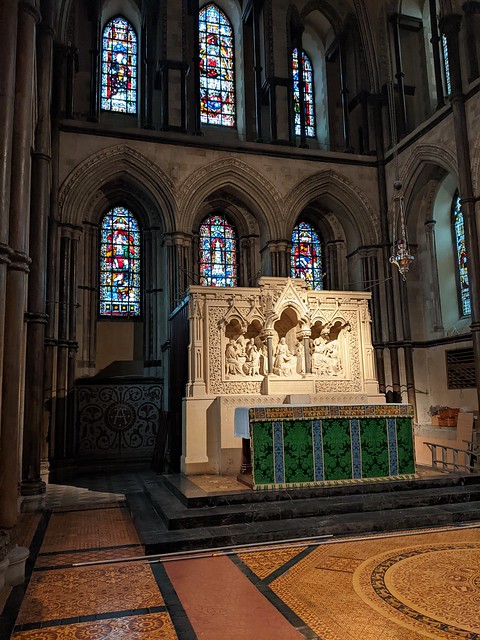
Sunday, 10 April 2022

Gunpowder Mills at Chilworth

I have walked in the hills above Chilworth and driven through the village countless times but until I spotted it on the map while looking for somewhere to go for a ramble on my day off I was unaware of the existence of the former Gunpowder Mills. What looks like a patch of ordinary woodland contains the remains of the Middle Works, part of a much larger industrial site that produced explosives from the mid 17th century until the end of the Great War. The ruins of many structures can be found among the trees and it’s all just sitting there free to wander around. You can even pick up a Heritage Trail guide on site provided by Guildford Borough Council, or download it before you go (PDF file, 3MB).
 
The West Lodge stands at the site entrance in Blacksmith Lane. This was where the workers would check in and be checked for sources of ignition, e.g. matches, pipes, etc.
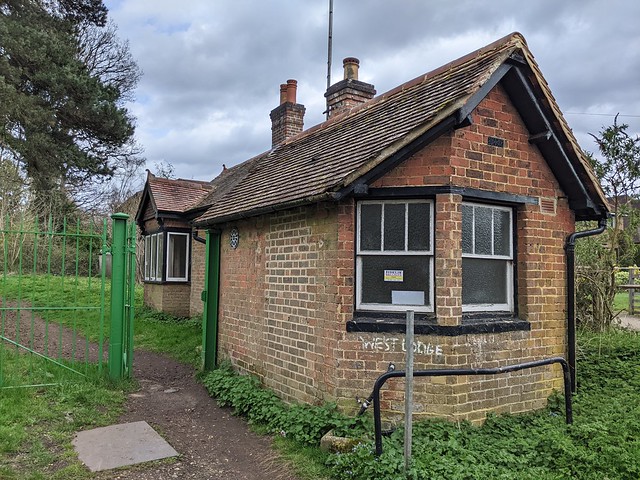
 
 Chilworth Gunpowder Mills, West Lodge.
West Lodge
 
Oddly it doesn’t seem that checks included footwear as in 1901 an explosion occurred in the Corning House, where pressed powder was broken up and sorted into grain sizes. A spark from a hob-nailed boot caused the explosion which resulted in the death of six men. Seems strange to me that hob-nailed boots were permitted on site. They did wear brimless hats however to keep the powder out of their hair since that could result in an unfortunate incident when they got home and sat down in front of the fire!
 
 Chilworth Gunpowder Mills corning house.
Remains of the Corning House
 
 
The Middle Works were built in the 1650s along with the New Cut, a 5-8m wide water channel used to transport materials in punts around the site. The finished product would be taken by waggon to the Wey Navigation and then to magazines on the Thames.
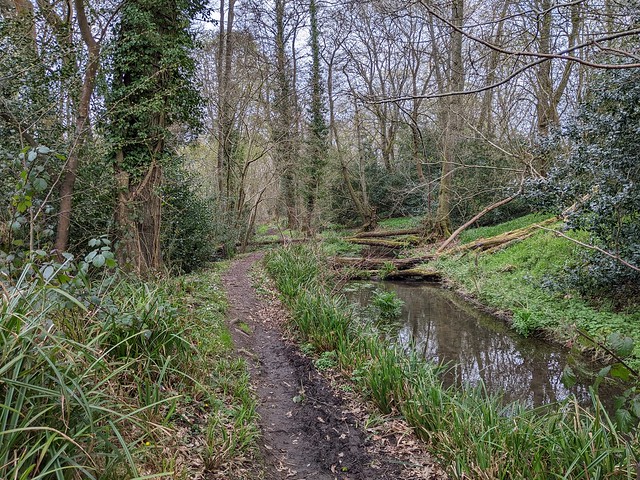
 
 Chilworth Gunpowder Mills, New Cut 1656.
The New Cut, 1656.
 
 
Many of the paths giving access to the site today follow the network of man-hauled tramways built on the site which also had a spur built to the railway line at Chilworth, crossing the New Cut on a swing bridge.This tramway was of metric gauge, the first such known in the UK. Nobody tell the Brexiteers, they wouldn’t like it. Narrow gauge wooden wagons (for obvious reasons) brought in coal for use on site. 
 
 Chilworth Gunpowder Mills swing bridge.
Tramway swing bridge over the New Cut, branch to Chilworth station.
 
There are two buildings on site which are apparently intact. These are the Expense Magazines, used to store materials between production stages and located next to wharves on the New Cut. Judging by the big steel gates across their doors they're still in use for storage although presumably not for gunpowder!
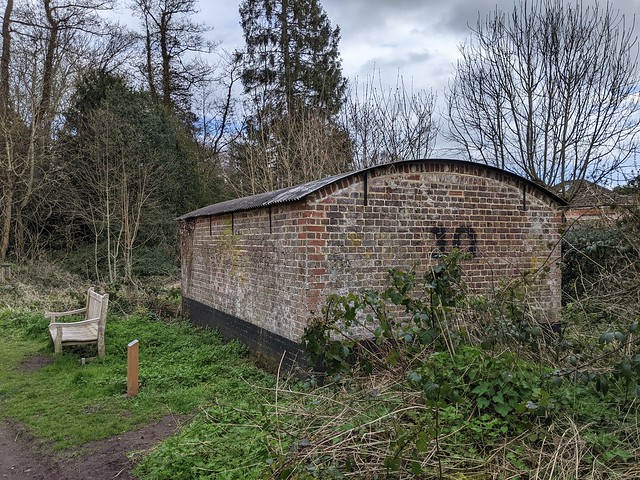
 
 Chilworth Gunpowder Mills, expense magazine.
Expense Magazine
 
 
The earlier steam Incorporating Mills where the mixture of saltpetre, charcoal, and sulphur was ground between mill stones like those used to grind grain into flour, are in a very ruinous state. Two bed stones and the engine bed and part of the boiler house chimney remain. Above next to the path is a row of worn out millstones sat on edge which would have been banked up with earth to form a blast wall.
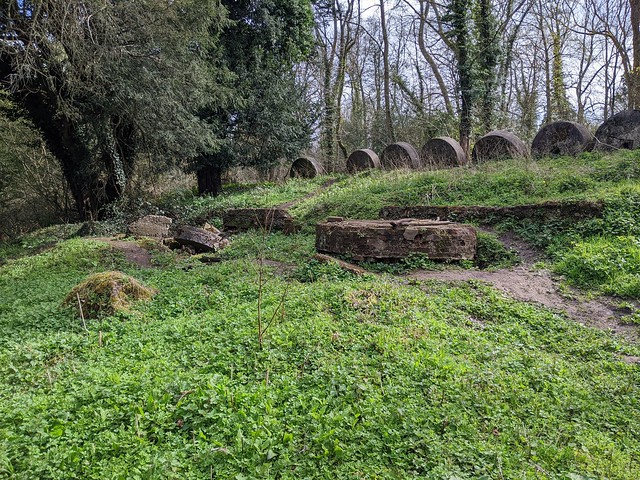
 
 Chilworth Gunpowder Mills, steam incorporating mills.
Steam Incorporating Mill remains.
 
The largest and most impressive structures remaining on the site are to be found towards the eastern end, next to the main tramway/path and the New Cut. These are the 1880s Steam Incorporating Mills. The tall blast proof walls remain and you can walk down the stairs into the gear rooms which would have been below a wooden floor at ground level.
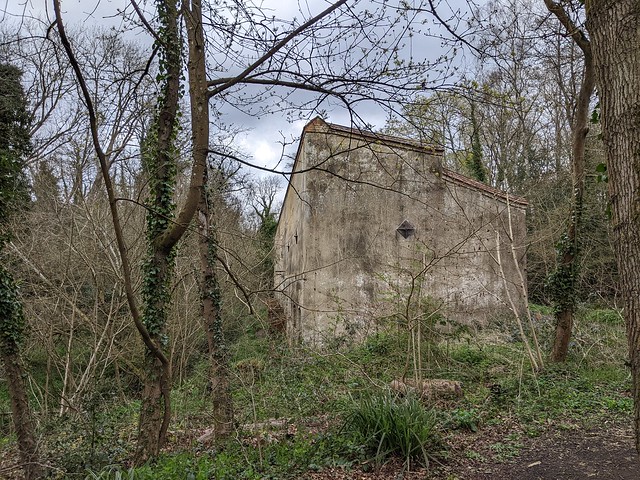
 
 Chilworth Gunpowder Mills, 1880s Steam Incorporating Mills.
Tall blast walls, 1880s Incorporating Mills.
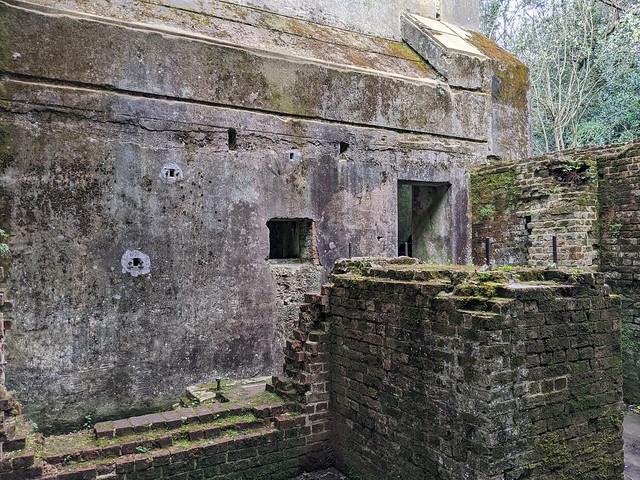
 
 Chilworth Gunpowder Mills, 1880s Steam Incorporating Mills.
Underfloor gear rooms, 1880s Incorporating Mills
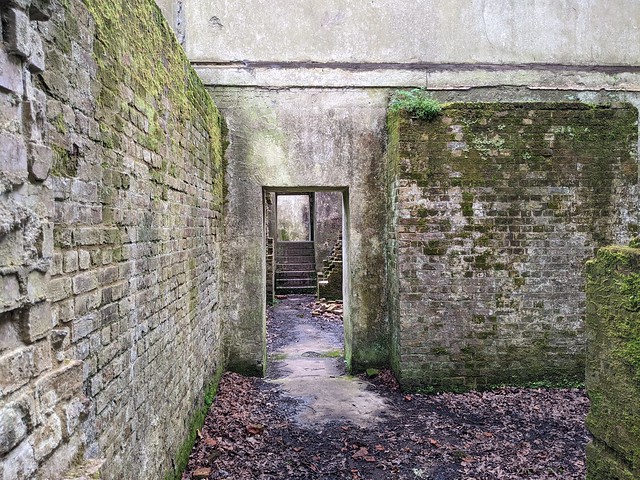
 
 Chilworth Gunpowder Mills, 1880s Steam Incorporating Mills.
Underfloor gear rooms, 1880s Incorporating Mills
 
Across the minor road at the eastern end of Middle Works is the Upper Works and an iron gate exists that was the entrance to the Smokeless Powder Factory. The Upper Works lies on private land with no access to the public however from the footpath leading to Mill Lane you can see the remains of the Afmiralty Cordite Factory further up-stream on the Tillingbourne, the river that provided water to, and runs through, the factory complex.
 
 Cordite Factory, Chilworth.
Admiralty Cordite Factory, Upper Works.
 
I do seem to have taken quite a lot of photos while wandering around the works, too many to include here but they can all be seen in this Flickr Album if you are interested.
 
The photos in the album aren’t in the west to east order that I’ve written this blog post since I started in the middle of the site having walked down from St. Martha’s Church, high on the downs above. That’s worth a visit too if only for the far reaching views.
 
 
Getting there: You could park up at St. Martha’s Hill car park in Guildford Lane and walk down as I did, it’s a fairly long climb back up so if you’re not feeling energetic park in Chilworth and access via Blackthorn Lane or Vera’s Path which is the route of the tramway spur to Chilworth Station, which is served by GWR trains between Redhill and Reading. Buses from Guildford, Redhill, and Godalming also stop outside the railway station.

Saturday, 9 April 2022

At God's Own Junk Yard

2nd April 2022

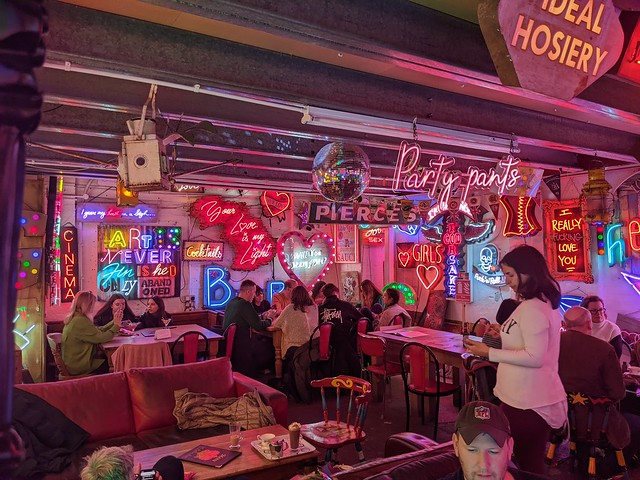
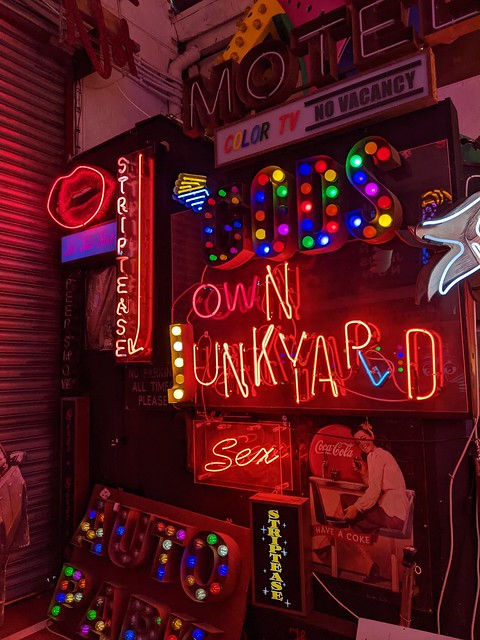
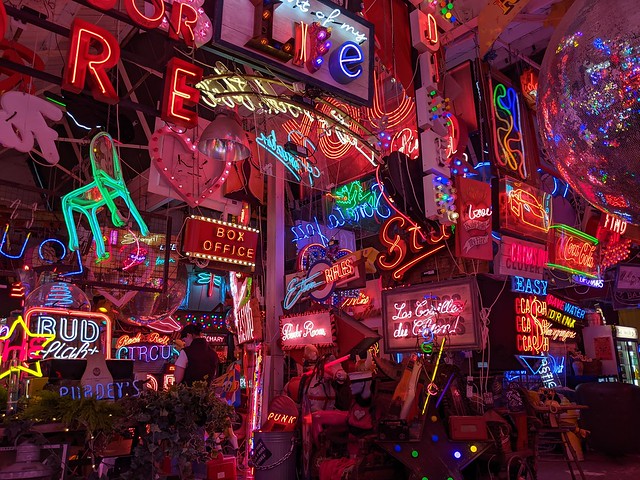
I’d read about God’s Own Junk Yard in a few places recently so as I found myself only a bus ride and a short walk away couldn’t pass up the opportunity to pay it a visit. Located in Ravenswood Industrial Estate, Walthamstow this unique business is part gallery, part museum, and is also a cafe/bar “The Rolling Scones”. An unremarkable industrial unit from the outside, inside is a terrific jumble of neon signs, light boxes, props, and ephemera. 
 
 God's Own Junk Yard
 
It’s not a huge space but there’s so much here that you can walk round it several times and still see something you missed before. Or get a drink or a coffee (the coffee is good) and find a seat and just look about you.
 
 God's Own Junk Yard
 
 God's Own Junk Yard
 
 God's Own Junk Yard
 
 God's Own Junk Yard
 
God’s Own Junk Yard is open Fridays, Saturdays, and Sundays but check their website because sometimes they are closed for private events.Oh, and if you want to hire a neon sign they are also the people to talk to.
 
 God's Own Junk Yard
 
Note that you can take photos inside for personal/social media use but mobile phone cameras only, no DSLRs. 
 

Thursday, 31 March 2022

Exe-ploring in Devon. Part 3.

Monday 28th March 2022

Dawned overcast and much cooler than yesterday. It would not be a day for laying about on beaches so I decided to take a ride down the Western side of the Exe estuary to Teignmouth. There were no crowds on the seafront today and hot coffee was more appropriate than ice cream for a walk along the prom’.
 
 Teignmouth Beach
 
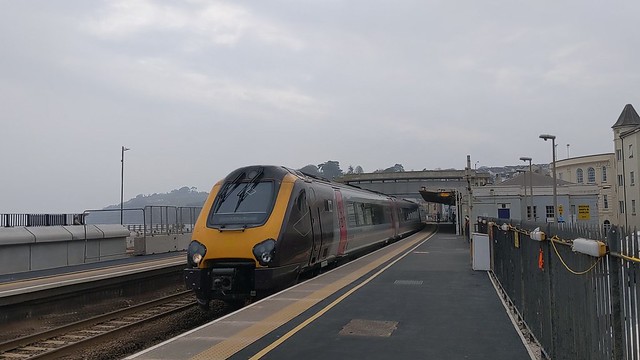
At least it stayed dry. I walked out along to the east of the town where the South Devon main railway line runs along the shore edge and shot some photos and video of the trains and then got a train to Dawlish for lunch sheltering from a brief rain shower in the park in the centre of town with a warm pasty from the local bakery. Of course ‘warm’ in pasty terms means something akin to the contents of a volcano and they always seem to get hotter before cooling enough to consume without fear of injury. It must be an anomaly of physics. But a tasty one :-)
 
 Dawlish, South Devon Main Line
 
Dawlish has some very good spots for watching the trains traveling along the seafront - it’s not trainspotting if you don’t write down numbers - and so I got some more footage. Dawlish Station and the area nearby is a bit of a building site still as part of the sea wall repair works so part of the beach is behind barriers. It will be better when it’s finished I’m sure.
 
 Dawlish, South Devon Main Line
 
I hope when they finish the station works there will be more than the one seat on the platform to go with the planned new lighting. And they can fix the dot-matrix sign which inexplicably thought it was at Taplow and couldn’t display any train information :-)
 
I was going to break my journey back to Exeter at Starcross but the weather was looking a little threatening and the seat on the train was comfortable so that will be somewhere to visit at another time. 
 
I had a quiet last evening in Exeter and made an earlier train home the next morning. I enjoyed my first 2022 holiday and given that it snowed today (Thursday 31st) I seem to have timed it just right :-)
 

Wednesday, 30 March 2022

Exe-ploring in Devon. Part 2.

Sunday 27th March 2022

Off to the seaside, by train from Exeter Central for a scenic ride along the coast to Exmouth. Alas unable to get a suitable window seat since everyone else appeared to have had the same idea! Glorious sunshine and actual tee-shirt temperatures probably responsible for that.
 
 Exemouth Beach
 
A long walk along the seafront, up onto the cliffs, and back down to the town centre where ice creams and coffees could be obtained without joining the incredibly long queues on the seafront. Exmouth is a pleasant resort and I had considered staying there for the weekend rather than Exeter but the extra cost of seaside hotels helped make that decision.
 
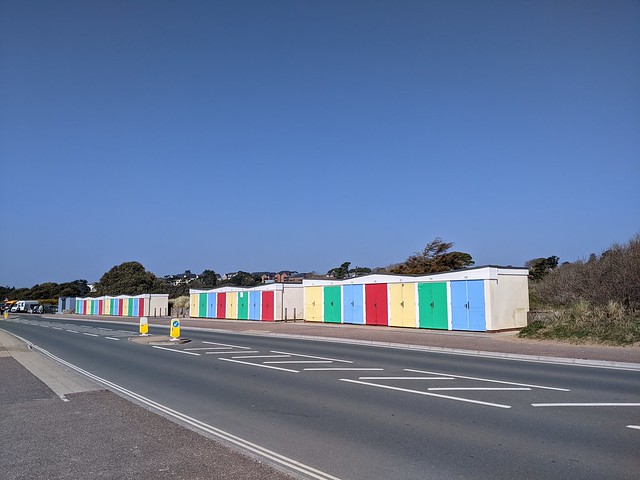
 Exemouth Beach Huts
 
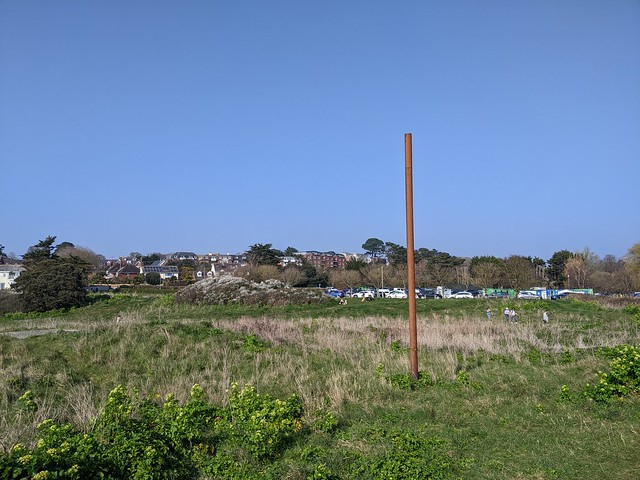
Nice beach huts but not the best location with a busy road between them and the beach. It was beach and book time for a while then I noticed an interesting local feature on Google Maps:


Well I just had to investigate, didn’t I? One of the good things about Google Maps is that anyone can suggest locations to be added to the map. Now from experience Google don’t always accept even genuine places so it’s nice to see the tables turned and users have a little innocent fun :-) Not that Exmouth’s Rusty Pole isn’t a genuine place.
 
 Exemouth's Rusty Pole
 
So if you are in the area make sure you visit this unusual tourist attraction. And make sure you give it a review on Google Maps :-)
 
Part 3 later. Lots of trains.

Exe-ploring in Devon. Part 1.

Saturday 26th March 2022

The end of the annual leave year and a goodish wether forecast means time for a little railway trip holiday. I might have visited Exeter once long ago but I’d never stayed there so booked 3 nights at Jurys inn, being not too far from the railway stations, and an off peak return to St. James Park (Exeter). At Reading GWR was providing its usual Saturday menu of late-running trains and I could have caught the delayed service prior to that on which i had a seat booked. I thought it might be a bit crowded so let it go which turned out to be a mistake really since the 1230 departure hadn’t even left Paddington by the time it was supposed to have reached Reading and we all spent a windy hour on platform 7 wondering if it would turn up or be cancelled. It turned up about 27 minutes late and everyone piled on board and off to Exeter St. Davids I went, arriving 30 minutes later than expected. This would have meant a longish wait for a connection however a late-running train to St. James Park turned up after a few minutes thus getting me to my final destination 29 minutes late and alas only eligible for the lowest Delay Repay compensation band.
 
I hadn’t made the mental connection between St. James Park and Exeter City’s football stadium and as it turned out they were at home to Stevenage that afternoon but by the time I got there the crowds were all inside and cheering loudly - Exeter won 2-1 - so that was an advantage. On the other hand there were two dozy women who suddenly decided that they were on the wrong train, having been told they’d need to get off at SJP and catch the following one instead decided to stand in the doorway and have a prolonged discussion about it so that everyone else had to struggle to get past them and onto the platform. As the train pulled out I realised that somewhere in the scrum I’d dropped my hat :-( I’ve just jumped through the hoops to register it with GWR lost property which surprise, surprise involves creating an account with some hitherto unknown third party that they’ve contracted out to. 
 
Anyway, I found the hotel and in spite of the 1600hrs check in time specified on the booking, which seemed unusual to me, they let me in just after 3 o’clock and I was able to get my feet up and a brew on.
 
Suitably refreshed and no longer dragging a large holdall about I went off to explore Exeter.
 
 Exeter High Street
 
Having been heavily bombed during the war in the 1940s Exeter has some fine examples of post-war buildings in the city centre and unlike some other places they haven’t yet been demolished and replaced with a shiny, USAnian style, privatised shopping mall. Also they appear to have been kept in a good state of repair - or perhaps refurbished?
 
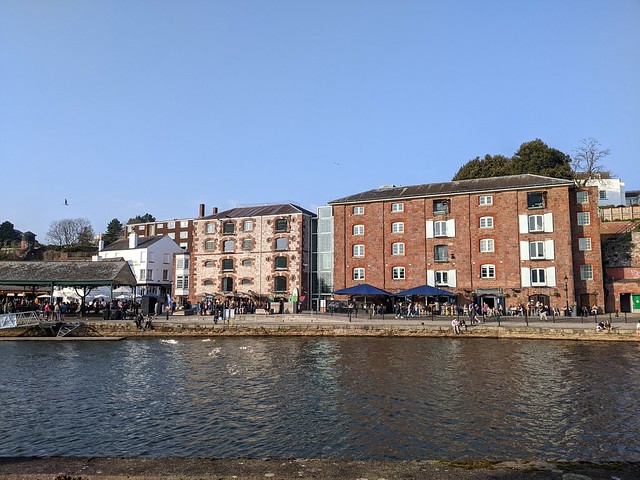
 Exeter, The Quay
 
It’s a fair walk down to the Quay but that’s where much of the action is early on a Saturday evening when it’s sunny. I went for a walk up and down the banks of the Exe and then headed back up towards the city centre to find a pub where I could get near the bar to buy a beer (The Ship) and not being able to make up my mind where to go for dinner did the obvious and got fish and chips and sat on the green outside the cathedral.
 
 Exeter Cathedral
 
Then back to the hotel for a couple of beers and some interesting conversations in the bar :-)
 
Part 2 will follow, Exmouth, sunshine, a beach, and a rusty pole.

Trains By The Sea

South Devon Main Line at Teignmouth and Dawlish.

Shame the sun didn't come out as well.

Thursday, 3 March 2022

Rochester.

28th February - 2nd March 2022

I had some leave to use up so between the “end” of the plague and the beginning of World War Three I took a little train trip to Kent.
 
 
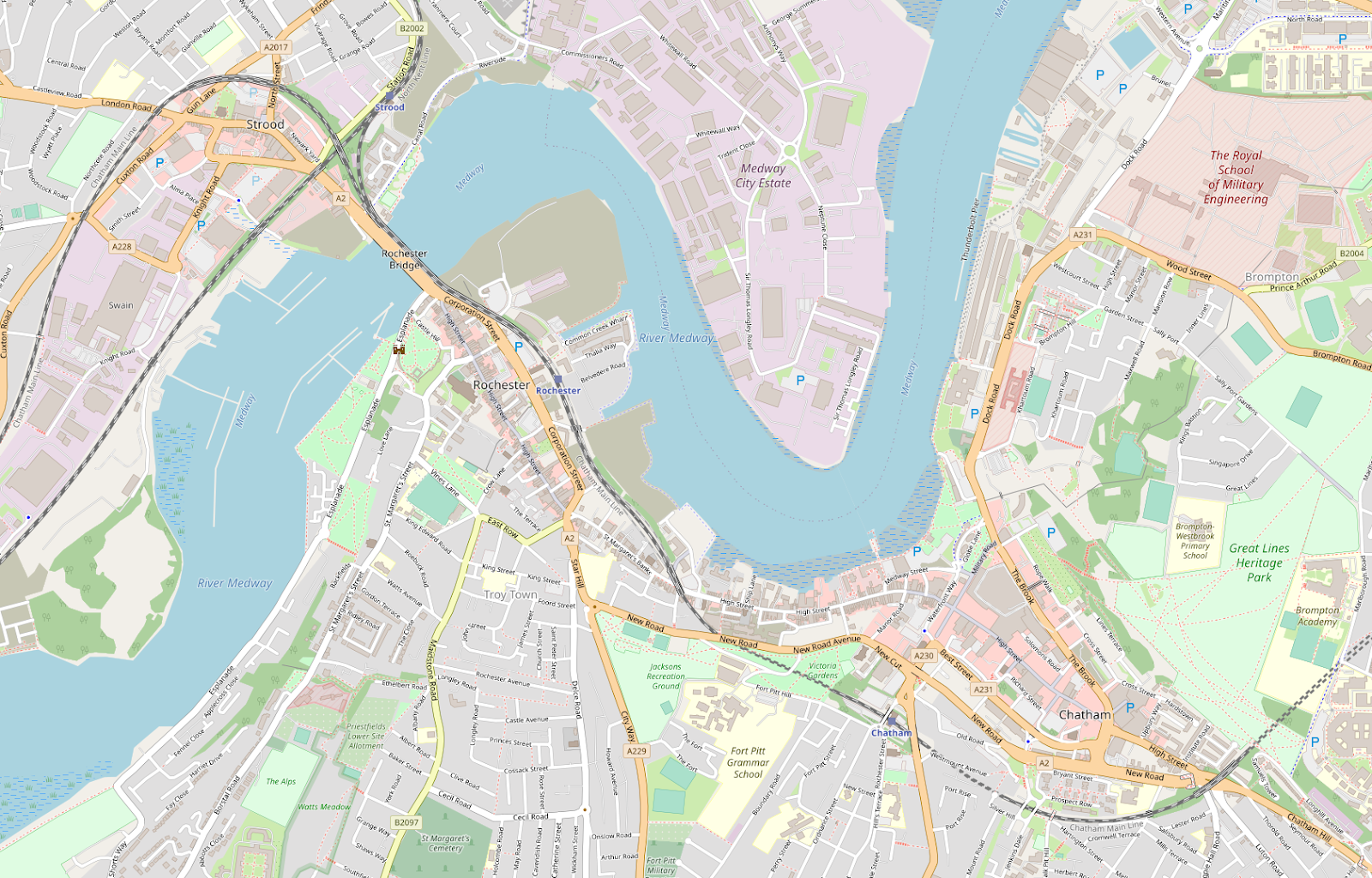
Rochester sits on a bend the River Medway about 30 miles from London. Historically it’s a city but due to an administrative cock-up officially it isn’t any more. In its favour as a tourist destination it does have a castle, a cathedral, a high street with a lot of interesting buildings, strong connections to Charles Dickens, and frequent trains from London Victoria (as well as sitting astride the main A2 road from London to the channel port at Dover). I took the train via Guildford, Clapham Junction, and London Victoria and at £25 return with a Network Railcard it was almost certainly cheaper than if I’d driven. And the trains all ran to time for once!
 
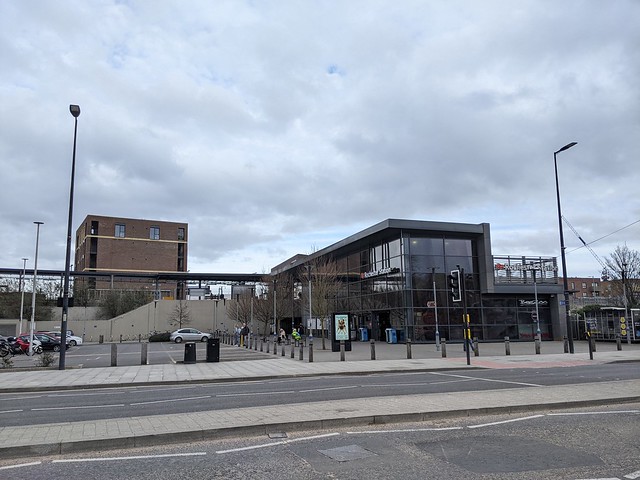
 Rochester Station
 
The station is close to the city centre (to hell with the bureaucrats) and has a Travelodge just behind it which is fine for a couple of nights and being quite new hasn’t had a chance for the fixtures and fittings to fall apart yet. From the third floor I could watch the trains arriving and departing the station below. I took advantage of the lack of rain and went for a walk around the city centre to get my bearings and in search of victuals. The Crown at the bridge end of the high street was quiet - it was Monday and early evening - and provided a decent burger and chips and pint of Spitfire. 
 
 Rochester High Street
 
The High Street was mostly quiet, quite a few places didn’t open on Mondays.
 
 Rochester and the River Medway at night.
 
I walked across the river bridge to Strood which appears to be the shopping area for Rochester, having a retail park and supermarkets and was rewarded with a view of the illuminated castle and cathedral across the Medway. And so to bed.
 
The next morning was predictably wet, I’ve decided that when I book leave it adversely affects the weather, I’m used to it now and fortified with a flat white from Costa I headed first for the castle.
 
 Rochester Castle
 
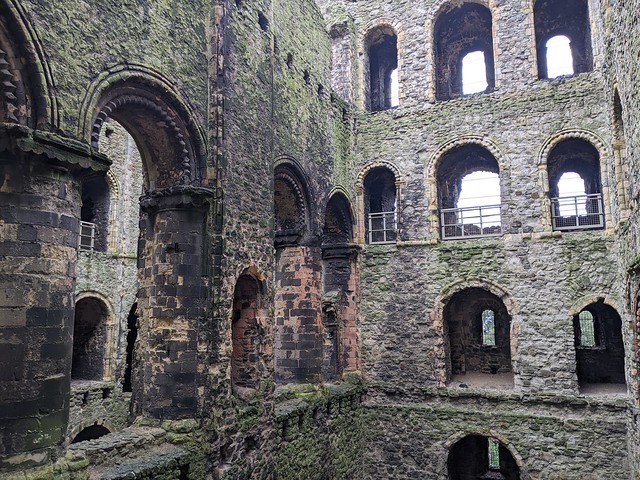
It isn’t hard to find, sitting high on a hill in the city centre. Rochester Castle was started in the late 11th century and the tall stone keep built in the early 12th century by Gundulf, Bishop of Rochester and later Henry I granted it to the Archbishop of Canterbury in perpetuity because obviously the leader of a peaceful religion needs a ruddy great castle. The scene of many battles and sieges of the the centuries the castle and its grounds were opened to the public in the 1870s as a park, the grounds are free to enter when open in daylight hours.The castle is protected as a Grade I listed building and Scheduled Monument, the ruins are managed by English Heritage and open to the public for an entry fee of £7.20 at the time I visited. 
 
 Rochester Castle
 
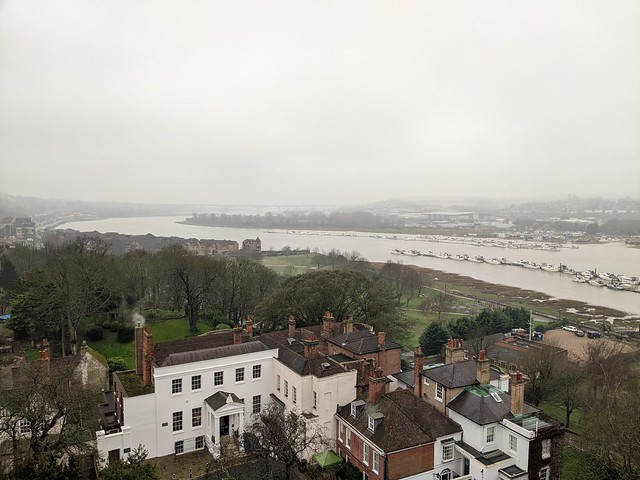
Which isn’t too bad considering there’s quite a bit of the keep still standing and accessible - in the sense that if you can climb lots of irregular staircases you can access it rather than the modern sense of accessible to people with disabilities. It’s worth the climb of 200-odd steps because even in fairly crappy weather there’s good views over the Medway and surrounding area. Which is why it’s where it is of course.
 
 River Medway from Rochester Castle.
 
Topically you can even see a Russian Soviet Navy submarine although this one’s no longer a threat to anyone.
 
 Rochester Castle
 
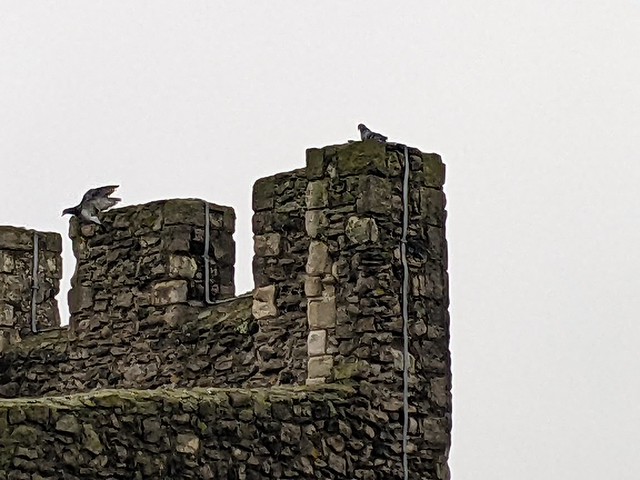
These days the castle keep is besieged only by feral pigeons in spite of the defences erected to counter them.
 
 Rochester Castle
 
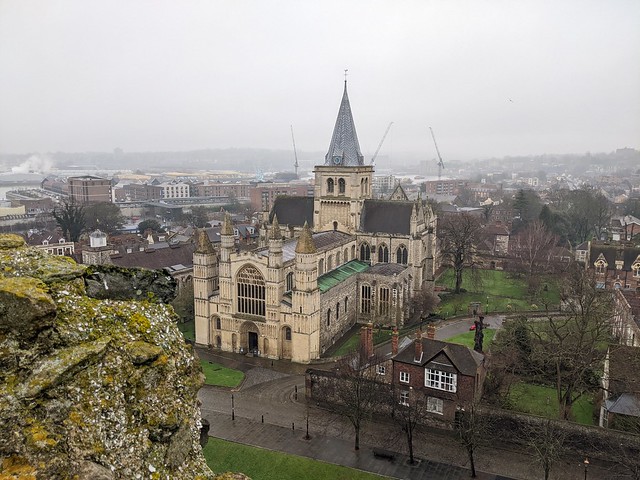
From the top of the keep I could see my next place to visit, Rochester Cathedral being gently rinsed by the falling drizzle.
 
 Rochester Cathedral from the castle.
 
Even as a godless heathen I can appreciate church and cathedral buildings. Particularly when they’re free to enter and warmish and dry. The cathedral has had a turbulent history since its founding in 604 and the original Saxon church has been replaced by a Norman and later building. It’s not a huge cathedral but impressive nonetheless.
 
 Rochester Cathedral
 
At the time of visiting there were more electricians working there than ecclesiastical types apparently installing new lighting, in the 21st century even the light of the world is by LEDs! I did notice a distinct military theme to the various memorials around the walls inside the church. Many of those memorialised seemed to have spent their time on earth helping to expand the empire. A striking number meeting a premature end in obscure parts of it possibly at the hands of the locals who didn’t appreciate the efforts of the great and good of Rochester to bring them civilisation.
 
 Rochester Cathedral
 
It hadn’t finished raining when I emerged and showed no sign of doing so. Heading through the city centre it was clear that many businesses made the most of the Dickens connection with the city and in the grounds of Eastgate House is his writing chalet looking a little out of place next to the Elizabethan house. There are a few other interesting old buildings too as befits Rochester’s long history and location on the route from Dover to London. Fairly free of chain shops too. I followed the High Street east and out of Rochester to Chatham, about a mile and a half away, to Fort Amherst, built centuries after Rochester Castle but for similar reasons. Built in the 18th century to defend the landward side of Chatham’s Royal Navy Dockyard from any invading army - OK, the French - it replaced the old town of Chatham which was then rebuilt in a bog at the bottom of the hill.
 
 Fort Amhurst, Chatham.
 
It’s a fair climb to the fort from the town and being still winter the main attraction, tours of the extensive tunnel system below, wasn’t open but it was free to wander around before walking back through Chatham town centre to the railway station.
 
 Fort Amhurst, Chatham.
 
Chatham and its Historic Naval Dockyard will have to wait for a future visit. I caught a train to Strood for the shops and retreated to the hotel for the remainder of the evening to dry out. The next day reversing the train journey rather than the journey planner’s suggestion of returning via Victoria, Paddington, and Reading which would have been disrupted by delays on the tube, falling between two strike days.
 
I feel a re-visit to Medway is on the cards as there’s much more to see than I had time for and it’s not too far away from home for a short break.
Meanwhile the usual Flickr Album is here.