Showing posts with label National Trust. Show all posts

Friday, 30 May 2025

May road trip journal, part 7

Day 9, Castle Douglas to Stoney Middleton via Nostell Priory. 228 miles.

When I departed Castle Douglas after breakfast my ETA at my next overnight stopping point was before check in time so I looked for somewhere to visit on the way. Nostell Priory, a National Trust property in West Yorkshire fitted the bill and I might as well make use of my NT membership for something other than free parking at Runnymede. The A75 got me to Gretna where I joined the M6 into England. At Penrith I left the motorway and crossed the Pennines on the A66 until joining the A1(M) at Scotch Corner and leaving it at Pontefract to head south west to Nostell Priory.

Nostell Priory

Nostell Priory is a Palladian house in West Yorkshire, on the road to Doncaster from Wakefield. It dates from 1733 and was built for the Winn family on the site of a medieval priory. The Winns were socially upwardly mobile textile merchants and the house was intended, as with so many such buildings, to show off their wealth and status. That wealth didn’t always match their ambitions. Robert Adam was commissioned to design additional wings but only one was completed so the frontage of the house is very obviously asymmetrical. Adam added a double staircase to the front of the house, and designed buildings on the estate, including the stable block where you’ll find the toilets, cafes, gift shop etc. The house has impressive interiors, Adam ceilings, lots of Chippendale furniture, lots of paintings, the usual stately home stuff. For me the most notable item was a longcase clock, with an almost completely wooden internal mechanism, made by John Harrison in 1717.

Nostell Priory, John Harrison's Clock

John Harrison was born but half a mile from the house and his stepfather worked on the estate as a carpenter. He developed an early interest in clocks and followed his stepfather into the carpenters trade, hence the wooden clock mechanism. Later he would become famous for developing accurate seagoing timepieces to solve the problem of determining Longitude at sea. Despite successfully producing such clocks he never received all of the monetary reward that was due (although he did eventually become a very rich man) and was badly treated by the establishment, the “gentlemen scientists” of which were loathe to acknowledge that a carpenter’s son had succeeded where they had not. Generations of sailors however have good reason to hold John Harrison in high regard.

Nostell kept me occupied for a couple of hours but I had to move on. I stopped for fuel near Wakefield and headed down the M1 towards Sheffield. For some reason known only to itself the sat-nav decided to go the “wrong” way around Sheffield which meant sitting in miles of crawling traffic before finally escaping into the Derbyshire Dales.

I arrived at The Moon Inn, Stoney Middleton at well past five o’clock, checked in and put the kettle on for a much needed cuppa. This time I didn’t need to put the kettle on the floor to plug it in. It was a nice room up in the first floor roof space, accessed by an outside door at the rear of the pub.

Stoney Middleton, The Moon Inn.

I had intended going for a chippy tea but it wasn’t open so ate at the inn instead. After dinner I’d planned on going for a wander around Stoney Middleton but looking outside saw that it was actually pissing down. Summer had arrived. Of course I had left my coat in my room. Since I’d have got wet going to my room I decided a better plan involved another pint and wait for the rain to let up after which I no longer felt the urge to walk around a wet Derbyshire village so I retired early.

Day 10, Stoney Middleton to Home. 181 miles.

I treated myself to a last holiday full English breakfast then checked out of the inn and since it was a fine sunny morning took a brief turn around the village.

Stoney Middleton, The Nook.

It’s quite picturesque, lots of stone buildings including a church and a toll-gate cottage which is also the Fish and Chip shop with the disappointing opening hours. In a little garden nearby to the tollbar is a large circular blue plaque bearing the following text:

BOOT AND SHOEMAKERS’ STRIKE

1918-1920

In tribute to the women and men of Stoney Middleton and Eyam who were on strike for over two years and set up their own co-operative factory. They sought the reinstatement of sacked colleagues, shorter working hours, a war bonus and recognition of their trade union, the National Union of Boot and Shoe Operatives.

Their action inspired workers in other local industries to join unions, and paved the way for better wages and working conditions for later generations.

Good on ’em, I say.

It was time to go home. Once again I picked a route avoiding the M25 despite the sat-nav insisting that it would be a whole 8 minutes quicker. Except it wouldn’t, it never is. I got home mid afternoon, unpacked and started on the big pile of laundry. The cupboards & fridge were looking a bit sparsely populated so I got a Ruby Murray delivered, shopping could wait until tomorrow.

Epilogue.

I’ve gone through the photos and got the album down to only 290 items. You can see them on Flickr here.

I drove a total of around 1,584 miles.

Accommodation cost was £962.31

Did I have a good time? Yes.

Would I do it again? Also yes, or at least something similar. I’d like to explore more of Dumfries & Galloway. I might stretch the driving to cut out the first and last nights stop overs although it’s a long way.

Should you visit Kintyre? If you haven’t already you certainly should.

Did I see the Beatle? No, I’m told he doesn’t live there anyway so there was no danger of that happening.

Monday, 19 August 2024

Operation Market Harborough

3rd August

Inspired by Mr. Hewes YouTube channel I decided at rather short notice to have a weekend in Leicestershire and watch people chucking tanks and other military vehicles around an old airfield at Operation Market Harborough. Managed to book a handy cottage for the weekend not far away in the village of Medbourne just a short drive from the show site too. 

I took many photos which are here: 
Operation Market Harborough Flickr album

Also made a video, available on YouTube here: 
Operation Market Harborough video

Since I had the whole weekend on Sunday I went over to see the impressive (and busy) set of canal locks at Foxton. 


To round off the weekend on the way home I made use of my National Trust card and paid a visit to the fine Tudor house at Canons Ashby


I had a busy but enjoyable weekend even if it was a long drive there and back 


Monday, 16 October 2023

The Ankerwycke Yew & St. Mary's Priory

15th October 2023
 
 
While I was walking along the nicely resurfaced towpath alongside the Thames at Runnymede someone stopped me to ask if I knew how to get across the river to Ankerwycke as they wanted to visit the ancient yew tree there. They’d been told there was a ferry but apart from one reference on a blog from 2018 to a proposed ferry I’m not aware that there’s been a ferry here in recent times. I directed her to the road route via Runnymede Bridge and the B376 to the small car park in Magna Carta Lane. Then I thought about how long ago it was that I last went there, which appears to be September 2015, so later in the afternoon I followed my own directions to Magna Carta Lane. From the small car parking area by Ankerwycke Farm a path leads along the edge of the field to an avenue of trees which you follow to your right to get to The Ankerwycke Yew & St. Mary's Priory.
 
 The Ankerwycke Yew & St. Mary's Abbey
 
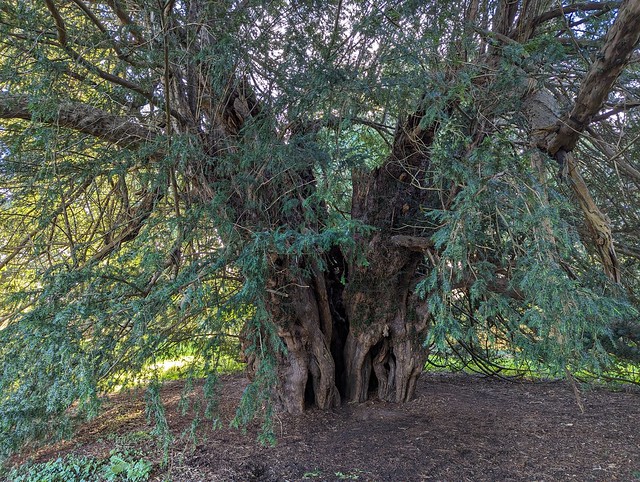
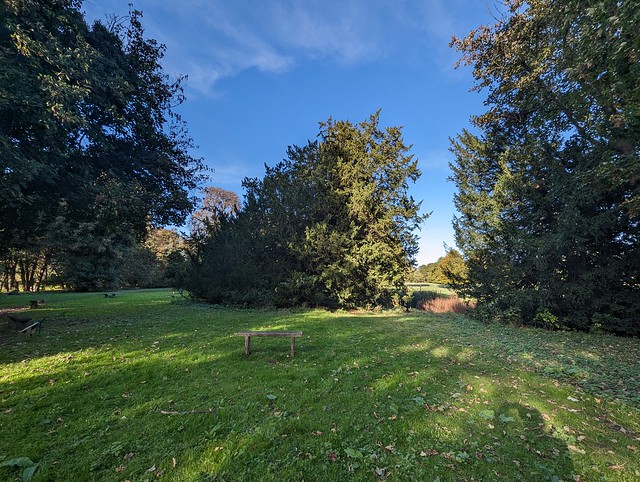
 The yew tree sits in a slightly raised grassy clearing with some simple wooden benches around three sides. It’s not particularly tall and is surrounded by much taller trees. But for a small sign you could walk past it and hardly notice what is at first sight another large bush. Walk clockwise around it though and it reveals a different face altogether.
 
 Inside the Ankerwycke Yew
 
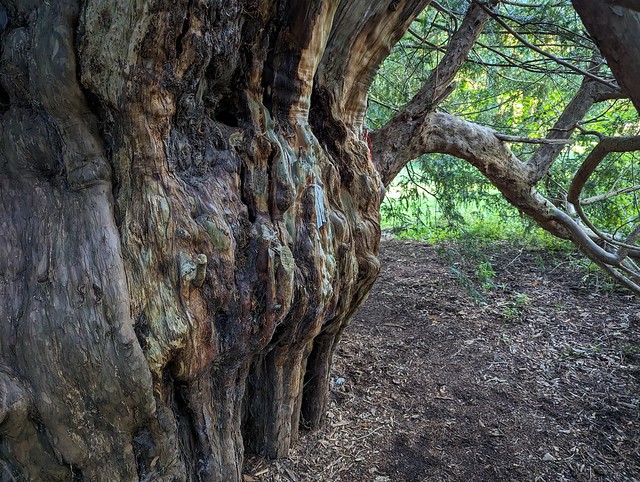
 The tree is at least 1400 years old and it is believed as much as 2500 years old. He (for this is a male yew) has like most of us increased in girth over the years and if he needed trousers would be looking for a 26’ (8m) waist size. His trunk is deeply fissured, almost hollowed out and branches reach down to the ground on almost all sides.
 
 Inside The Ankerwycke Yew
 
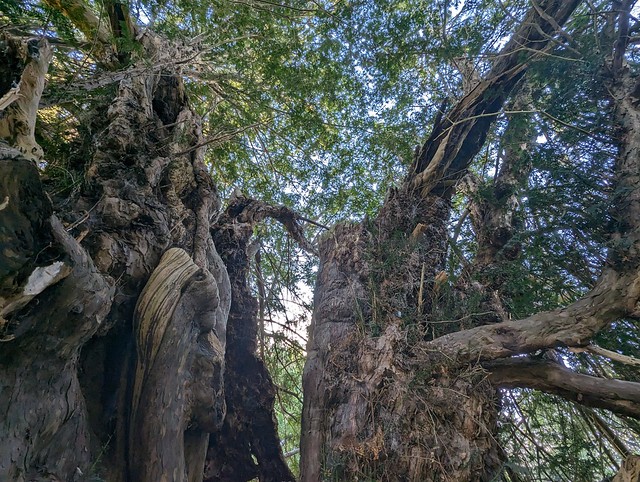
 It is cool under here, in more than one sense and when there’s no one else about eerily quiet. You get a sense of being in the presence of something old. Old enough to have witnessed had he had eyes to do so, from his slightly raised area in what would then have been a marshy flood plain King John and the barons sealing Magna Carta on the far bank of the Thames. Also allegedly Henry VIII “courting” Anne Boleyn at a somewhat closer distance, although those two seem to have got it on all over the place if all such stories are to be believed. In here you can see that even the thicker parts of the trunk still sprout leaves and where the trunk is bare people have fastened small ribbons, a practice that might date back a long way.
 
 Inside The Ankerwycke Yew
 
 Or maybe just to the 1980s, who knows? The tree obviously but he’s saying nothing.
 
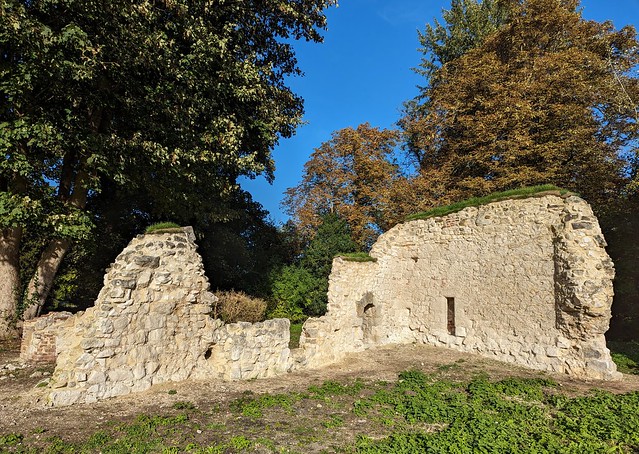
 The tree hasn’t noticeably changed since last I was here but coming out from under the canopy I found something that has. A few yards away stand the remains of St. Mary’s Priory, a Benedictine nunnery established around 1160 and dissolved in 1536 - maybe history would have taken a different course had the nuns chased Henry out from under that tree. In 2015 the ruins were securely fenced off and looked like this:
 
 Ankerwycke
 
 In 2022 they were excavated and seem to also have been given a thoroughly good scrubbing so that in this afternoon’s bright autumn sunshine they were so bright it almost hurt the eyes!
 
 St. Mary's Abbey ruins at Ankerwycke
 
 The fence has gone, along with the signage, though whether that removal is permanent I don’t know as the site still has a bit of a building site air about it.
 
 St. Mary's Abbey ruins at Ankerwycke
 
 From the abbey I walked through the woods to the bank of the Thames opposite Runnymede Pleasure Grounds and then back again via the yew. It was quiet, especially compared to the hubbub on the far side of the river where I’d been earlier.
 
 The Ankerwycke Yew
 
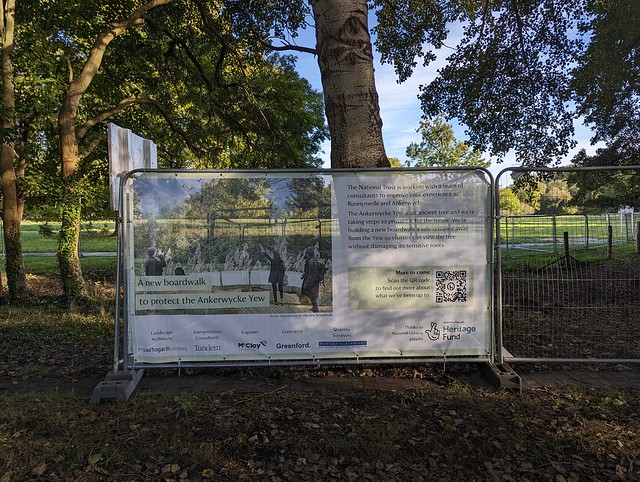
 It’s worth visiting this slightly out-of-the-way part of the National Trust’s Runnymede properties, even though it can be rather muddy getting to it, not too bad this time but evidenced by the row of boot-cleaning brushes fixed to the bottom of the sign in the Ankerwycke car park. If you want to get hands-on with the yew tree I suggest you visit sooner rather than later though. This has appeared at the end of the avenue of trees leading to the yew and abbey.
 
 Change afoot, Ankerwycke
 
It reads "The National Trust is working with a team of consultants to improve your experience at Runnymede and Ankerwycke.
The Ankerwycke Yew is an ancient tree and we’re taking steps to protect it for the future. We’re building a new boardwalk a safe distance away from the Yew so visitors can view the tree without damaging its sensitive roots.

More to come
Scan the QR code to find out more about what we've been up to."
 
I can find no plans online detailing how they are going to “improve my experience” and the QR code doesn’t link to anything useful. I’m unconvinced regarding the protecting the roots thing and the official National Trust walk guide encourages you to "Make sure to stop and have a look underneath the canopy of this venerable old giant.”. If footsteps have been a problem for 2500 years the tree doesn’t seem to be doing too badly. It’s hard to see in the above photo because of the light behind the translucent hoarding but the artists impression looks as if the boardwalk will be some distance from the tree, possibly the other side of the stream that runs across the site. If so you won’t be able to visit the tree, only visit a place where you can see the tree “over there”. Your Ankerwycke Yew Experience will be a bit like your Stonehenge Experience. Though with fewer “Druids”.
 
Speaking of the National Trust, if you are a member and reading this blog at the time it was published can I please encourage you to vote in the AGM to prevent the Tufton Street crooks, GBNews poundland-fascists, and the frog-faced f*ckwit of “Retore Trust” from taking over.
 
And if you’re reading from the future I hope that you can still get up close and personal with the Ankerwycke Yew. No licking it though for obvious reasons and wash your hands afterwards :-) 


Tuesday, 3 May 2022

Birthday treat 2022.

21st to 24th April 2022
 
Four days in Bridgnorth to start my sixtieth year.
 
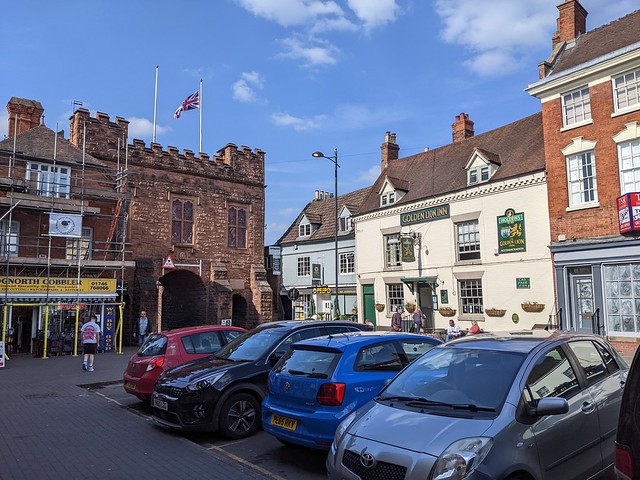
Staying at the very pleasant Golden Lion. Comfortable room and good beer and breakfast. Interesting local characters.
 
 Bridgnorth, Northgate.
 
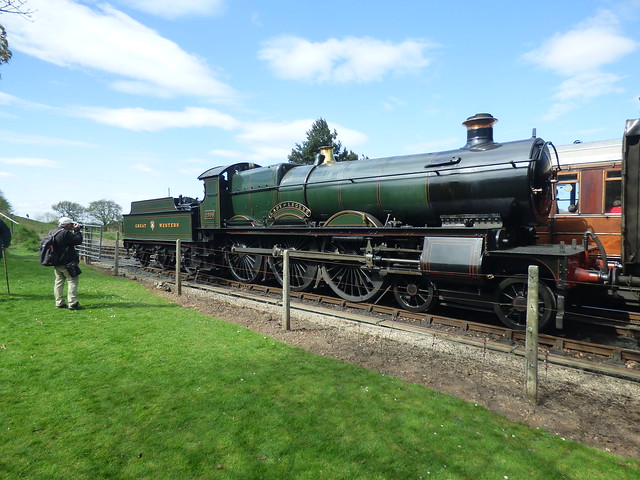
Steam trains! The Severn Valley Railway Spring Steam Gala. Another heritage line ticked off.
 
 Severn Valley Railway, Arley.
 
 
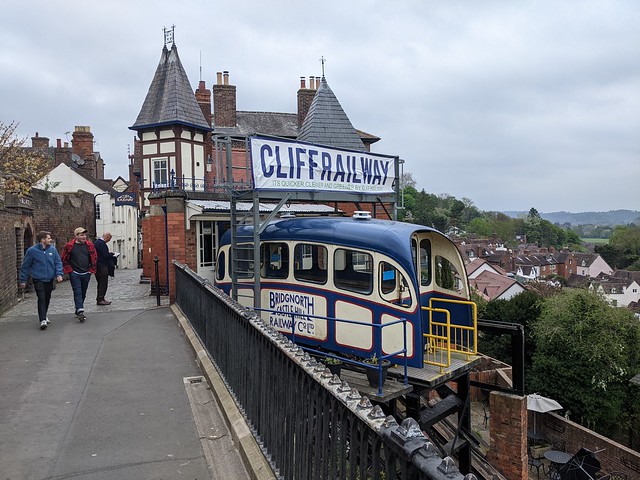
Funicular! Bridgnorth Cliff Railway linking High Town and Low Town. I have a hankering to eventually ride every UK funicular.
 
 Bridgnorth Cliff Railway upper station.
 
 
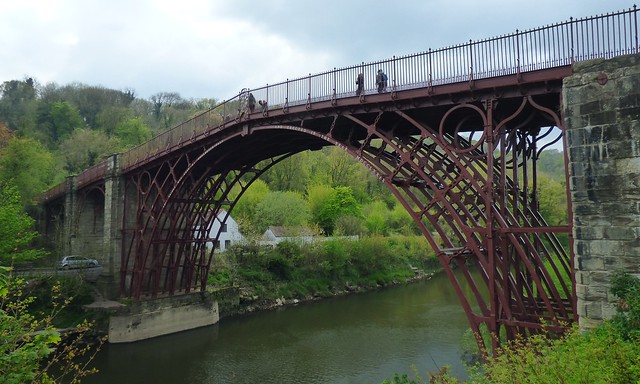
Ironbridge. Last time I came here was in about February 2009 and everything was absolutely bloody freezing. This time was a lot warmer and seemed to be visiting Steam Punk day.
 
 Ironbridge.
 
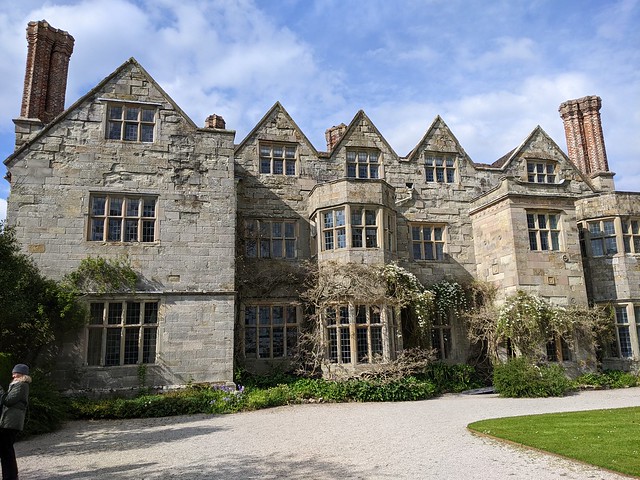
And a rather nice old National Trust property, Benthall Hall.
 
 Benthall Hall.

Sunday, 5 May 2019

Hinton Ampner

4th May 2019

Hinton Ampner
(National Trust)
Hinton Ampner, near Alresford, Hampshire, SO24 0LA
Adult £15.50 Child £7.75 Under 5s Free

Almost like acting my age I paid an afternoon visit to this interesting NT property - trying to make the most of my NT membership for another year - on a day when the weather didn't want to make up its mind what to do and therefore somewhere with indoor and outdoor interest was required.

The house itself is now mostly Neo-Georgian, rebuilt in the early 20th century by then owner Ralph (rhymes with waif) Dutton from an earlier Victorian house adapted from a Georgian house built on the site of a Tudor manor house. Clear? Go here for the full history from the NT.

It got rebuilt again in the early 1960s after Ralph unwisely left an open fire burning in the grate in the library while he went for a post-lunch walk in the woods and came home to find the house he'd spent 15 years rebuilding in his preferred Regency style well and truly ablaze.

It only took 3 years to fix it up again, at the same time replacing the burnt  bits he didn't like (mostly Victorian) with more-to-his-liking Regency style.

Wouldn't get away with that nowadays I shouldn't think, the powers that be would insist on restoration to previous state even if that meant it didn't get done at all.

For reasons of preventing damage by UV light the interior of the house like most NT properties is kept in a state of semi-gloom and I didn't actually take any photos inside. I can tell you it's very nice if you like Regency/Georgian interiors and that Ralph liked stone ornaments, particularly porphyry, and intricate stone-topped tables. There's an Adam ceiling in the dining room of course, as every good Georgian house should have. And a lot of china and "paintings, classical, for country houses".

Outside the house sits in extensive formal gardens within a larger estate. Adjacent to the house is the cafe, in a surviving Tudor building and the church stands a little way from the house.

I got an ice-cream from the young, posh* girl in the converted horse trailer between the house and church and found a seat in the garden on which to enjoy it. At which point the 10% chance of rain became 100%.

(* posh enough to mention to the previous customer that she likes to ride her horse on the estate tracks.)


It was only a brief shower after which I explored the rest of the gardens - several statues and lots of topiary - took lots of photos (see link at bottom of article) and then decided the crowd in the cafe had thinned enough to risk getting tea and cake. The risk for the solo visitor being that you get your tea and cake and when you turn around a load of OAPs have come in and nicked all the free tables.

Plenty of free seats this time though. Decent cuppa too and they give you a pot of hot water to top up the teapot ✔

Earlier while walking through the garden I noticed that the sundial was about 40 minutes slow.

Checking my watch instead showed I had about an hour and a half left before closing time, plenty of time to follow one of the way-marked walks through the countryside of the surrounding estate.

I decided a couple of easy miles would do and picked the Stewkeley walk which according to the NT leaflet and map would allow me to "Enjoy a short stroll around our estate and see how well Hinton Ampner fits into the surrounding landscape". And the showers looked like they were done for now.

Turn right through the small gate just past the church and follow the red markers. Simples.

They weren't taking any chances of you losing the path across the pasture certainly.

If the worst happened the red markers gave an emergency phone number to call and a location number so that they could come and find you.


The walk headed south from the house in an anti-clockwise loop (although if you wanted to be daring you could do it backwards, the markers work both ways).

As promised you could see how the house fitted into the surrounding landscape, especially from the top of the hill opposite (only a gentle ascent).

Where the walk emerges onto a metalled country lane you could either turn left to follow the route or right to detour to explore the village of Kilmeston. I took the short detour.

I didn't explore far but the bit of Kilmeston I saw consisted of a manor house hidden behind a high wall, a red telephone kiosk which no longer contains a payphone, a bus stop, and an 18th century church which didn't look that old from the outside, set in a neat yard with wide gravelled paths and all the gravestones re-sited to form a low wall along one side of the churchyard. And some expensive houses.

I retraced my steps and followed the way-marked route along the lane with one ear open for speeding Range Rovers as the lane is narrow with few refuge spots. As it happens the only traffic I encountered was, unsurprisingly, a solitary MAMIL.

The walking route passes through an avenue of Beech trees and then turns off left onto an estate track back to the starting point near the house and church.

There's a bluebell wood to the right of the path shortly after where it leaves the road and this is the right time of year for Bluebells. There were some other walkers here who were quite excited about it. There again I'm spoilt by having a bluebell wood outside my back garden gate ☺
And back to Hinton Ampner, exiting through the gift shop (there's no other way out) without even the merest hint of temptation to buy anything and taking the shortest and most scenic route home avoiding any major roads or motorways. I remembered the way without the use of sat-nav, not bad since it's a couple of years at least since I last drove it.

I recommend Hinton Ampner for a pleasant afternoon, at least if the weather is on your side.

Lots more photographs in this Flickr Album.

Sunday, 24 March 2019

Stonehenge Experience

24th March 2019

Last time I went to Stonehenge you could still walk right up to the stones, so it must have been in the 1970s. I vaguely remember the old visitor centre and car park. Of course back then the A344 still passed to the north of the monument, since then it has been closed and partly obliterated, the remaining part being used for shuttle buses to ferry the less able bodied or the lazy from the new visitor centre to the stones.

The new visitor centre contains an exhibition about the site, a ticket office, toilets, and of course a gift shop and cafeteria.

Entry is by timed ticket. I got in for "free" as an English Heritage member as do National Trust members but you do need to download a timed ticket and present this at the ticket office where an entry ticket will be issued. I was a bit early but was told not to take any notice of the time on the ticket and just go in anyway via the exhibition where my ticket was examined and ticked with a marker pen. The exhibition would be worth spending some time studying if you weren't at all familiar with Stonehenge. I gave it a brief tour and then headed outside, past the replica neolithic houses, and walked up the former A344 to the monument.

On the way there is a roadside memorial to Major Alexander William Hewetson, of the 66th Battery Royal Field Artillery, who was killed in a flying accident on 17 July 1913. In the early 20th century this was a  popular area for flying (and crashing) military aircraft. By the visitor centre is another similar memorial, the Airman's Cross,  erected in memory of two pioneer airmen, Captain Eustace Loraine and Staff Sergeant Richard Wilson, who were killed in a flying accident near Stonehenge in 1912.

On arrival at the end of the access road where the shuttle buses stop my ticket was checked again and I was allowed to join the crowds around the stones. The majority of whom seemed to be busloads of European teenagers, presumably on school trips. Along with them were the obligatory Oriental tourists and the occasional New Age pagan type. What they all had in common was an obsession with taking selfies.

I had downloaded the free app and audio guide before my visit - although I had to dig out an older smartphone as the app refused to play more than 1 second of the audio on my current one - so I put my earphones in which helped cover the noise from the student horde and made my way around the site with the guided commentary. Which was actually quite clear and informative. Worth getting if you're visiting, audio guide gadgets can be rented from the visitor centre if you don't have a suitable smartphone or tablet.


The stones remain an impressive feat of engineering whatever their purpose was.

There are plenty of theories and many of them have evidence to support them. I don't propose to go not them here though.

One thing is certain though, they had bugger all to do with the Druids. Not the original ones anyway. There were one or two modern ones amongst the crowds though.


Concern for the preservation of the underlying archeology and the misbehaviour of some visitors in the 1970s means you can no longer get within touching distance of the stones unfortunately.

The closest point that the fenced path gets is to the back of the monument where many of the stones are missing, affording a better view into the interior.

It's here that the press of selfie takers is thickest. In fact some visitors don't seem to bother looking any further. Stonehenge ✅
Walking back to the visitor centre I went the quiet way, up across the chalk to the Cursus Barrows and then behind the wooded area of the Fargo Plantation.

Up here there were hardly any visitors. It was a pleasant stroll back in the sunshine with the short turf underfoot, a gentle breeze, and the sound of birdsong (and the distant A303) in the ears.

That A303 of course may not be there in future if the plans go ahead to put it in a tunnel, depriving passing travellers of a free view of the stones. It might or might not also end the long traffic jams at busy times although more likely will just move them elsewhere.

So did I enjoy my second visit to Stonehenge? Yes, up to a point. Over the last couple of years I  have driven past it many times on the way to work somewhere or other so it made a change to turn off at the Winterbourne Stoke roundabout instead. Would I have visited if I'd had to stump up the £20 rather than got in "free" as a member?
Probably not if I'm honest. As with many of our heritage sites there's a certain amount of "disneyfication" that puts me off.

Anyway, Flickr Album of photographs of the stones and surroundings here.

Saturday, 21 July 2018

I Remember Yew

21st July 2018

Took an afternoon stroll to see the oldest living thing around here , The Ankerwycke Yew. Standing on the opposite side of the River Thames from the popular Runnymede memorials to Magna Carta and JFK this ancient tree has been witness to centuries of history.
The Ankerwycke Yew
The tree is at least 1400 years old and could be as much as 2500 years old. That's extraordinary. It was here when Magna Carta was being "signed" across on the other bank of the Thames. Or maybe closer according to some arguments which say the signing was done on the Ankerwycke side of the river. It is also said to be the location where Henry VIII met Anne Boleyn in the 1530s. Though I'm not sure who says it, lots of things seem to get attached to the "history" of Henry VIII and Anne Boleyn, especially if it attracts visitors. That said Ankerwycke is much less busy than Runnymede which is just as well as the parking area, in Magna Carta Lane, Wraysbury, is very small. From there a permitted path leads through fields to the Ankerwycke Yew and the ruins of St. Mary's Priory. Today following this summer's prolonged dry spell the ground was firm, dry and dusty although on a previous visit it was quite muddy and thanks to the presence that time of a herd of cattle, not just muddy. There's a sign at the gate where the path starts but after that it's not well signposted. Keep the hedgerow to your left through two fields until you get to a broad path lined with mature trees. Turn right and follow this avenue which will take you to the yew and priory.
Under the Yew

The tree is hard to miss having a girth of 26 feet (8m) but just in case you're unsure it's the one with a semi-circle of wooden bench seats around it.

The main trunk is riven with splits and almost hollowed out and the branches hang down almost to the ground on all sides. If you stand underneath it's nicely shaded - which was welcome today with the temperature in the high twenties celsius - and the thing has... presence,  particularly if there's no one else about. Not exactly spooky but you can sort of sense the weight of history. Despite the over-flying jet airliners departing Heathrow Airport it feels rather peaceful and between the jets at least it's hard to believe that you are so close to London. Close to the yew tree are the ruins of St. Mary's Priory, small and fenced off alas but the path runs right alongside so you can see it close up. You can also just see the ruins from the other side of the river at Runnymede. 
St. Mary's Priory
On the subject of St. Mary's Priory the Source Of All Knowledge (a.k.a. Wikipedia) says:

Ankerwycke Priory was a priory of Benedictine nuns in BuckinghamshireEngland. It was established around 1160 and dissolved in 1536.

The priory is in the care of the National Trust whose website says:

These crumbling walls were once a nunnery, built during the reign of Henry II and dedicated to St. Mary Magdalene. Following the dissolution of the monasteries the priory passed into private hands, and was patched up many times over the years. During the 19th and 20th centuries much of the surviving building fell into disrepair, and today only a few overgrown walls remain.

There is a lot more information about Magna Carta and Ankerwycke on the wraysbury.net site including evidence that Ankerwycke, then a small island belonging to the nunnery, might have been the actual site where King John and his barons met to sign Magna Carta rather than the flat marshy meadow at Runnymede where the barons were camped. 

There are more photos of the Ankerwycke Yew and St. Mary's Priory on my Flickr feed.

Saturday, 17 March 2018

Brummagem part three

Day three 14th March 2018

A historic railway station and a trip to Worcester

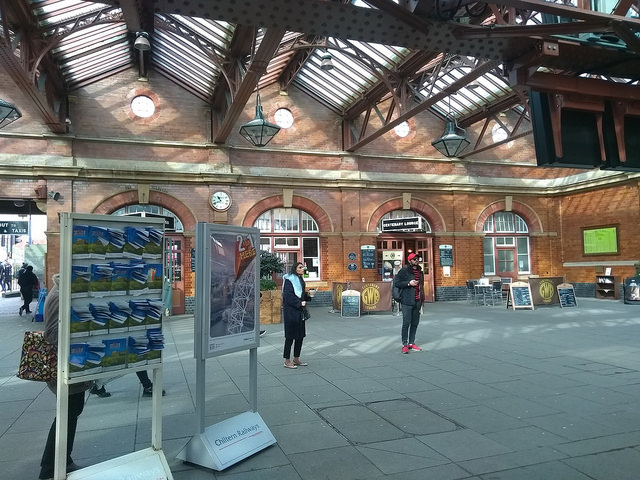
For my third day I decided to venture out of Birmingham and catch a train to Worcester, a city with which I'm familiar but haven't visited for some years. I wanted to see if it had changed and to see some of the bits I'd not previously visited, such as the cathedral. So once again up, showered, out, breakfast (Pret), and this time down to Moor Street station. Unlike the labyrinthine New Street and the subterranean Snow Hill, Moor Street is a traditional station,  a combination of the original station, opened in 1909 by the GWR as a terminus for local trains, and a newer Moor Street station with through platforms, adjacent to the original, which opened in 1987, the two were combined into one station in 2002, when the original was reopened and restored, and the newer station rebuilt in 1930s style. It's certainly the nicest of the three.

Moor Street station

Moor Street station

Moor Street station

Moor Street station water tower
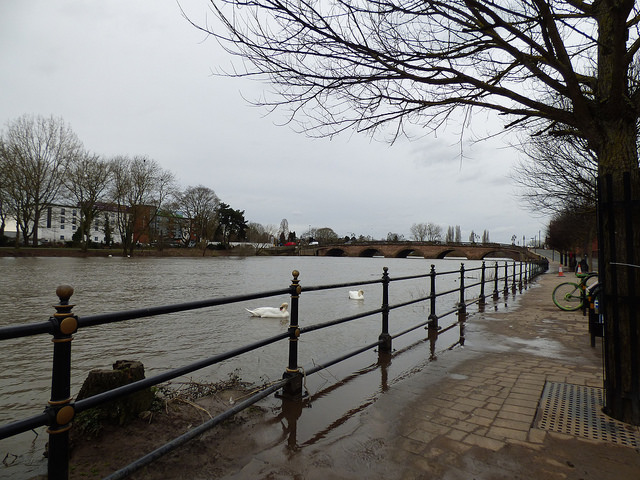
The 11:09 West Midland Railway service took a little under an hour to get to Worcester Foregate Street and is under a tenner for an off-peak return. A walk down through the city centre showed few changes, some familiar shops gone, some moved. The biggest change being the recent big redevelopment of the Cathedral Square shopping mall. Carrying on down to the bridge found the River Severn very full as usual at this time of year. So full that it had overflowed its banks in places blocking the path to the cathedral.

River Severn
River Severn in flood

Worcester Bridge
Next was the cathedral, or as its officially called ,the Cathedral Church of Christ and the Blessed Mary the Virgin of Worcester. (No gags about finding a virgin in Worcester please.) Built between 1084 and 1504 it towers over the Severn and contains the tombs of King John of Magna Carta fame, Prince Arthur, younger brother of Henry VIII, and Stanley Baldwin, three-time UK Prime Minister. I'd never been inside before. It's big. Very big. 
Tomb of King John

Worcester Cathedral crypt

Worcester Cathedral interior

Worcester Cathedral interior & tomb of King John


Worcester Cathedral from Cathedral Square
There's little left of medieval Worcester apart from the cathedral, much having been replaced in the 1960s in what some locals refer to as "the rape of Worcester" when the council redeveloped much of the city centre. Friar Street contains quite a few ancient buildings including Greyfriars, built around 1485 and since 1966 owned by the National Trust. I'm a NT member so that was the next place to visit.

Greyfriars

The volunteers in Greyfriars were very knowledgeable and informative and able to discuss the long history of the house and its former occupants. Part of the house is still let as a private residence - part of the agreement of its being given to the trust being that it remained in use as a home not just a museum.

Friar Street

Friar Street

Friar Street
After a day in Worcester it was time to return to the station (via Starbucks) and get the train back to Birmingham. The return train went via Worcester Shrub Hill where it stopped for a 15 minute rest, so the trip back to Moor Street was a little longer in duration.

Worcester Foregate Street station
Selfridges Building, Bullring, Birmingham
Back to the hotel for a bit then out again for food and a couple of pints in The Wellington. The beggars were out in force again in the city centre but were at least willing to accept the blatant lie "sorry mate, haven't got any change" and move on.

Day four 15th March 2018

The return home

Checked out after another comfortable night and breakfasted at Pret again, using their Wi-Fi to check the travel situation and to find out how close May and Putin were to chucking nukes about. The train from New Street was only a couple of minutes late and after the usual seat claiming dance made an uneventful journey to Reading, easily making Reading in time for the connexion to Sandhurst. Despite gathering clouds I was able to walk home from the station without getting wet.

It was an enjoyable trip all told and considering I'm writing these reports while watching the snow fall again, well timed weather wise.

I took many more photos than shown in this blog and they can be seen in this Flickr Album