Tuesday, 3 March 2020

Hayling Billy

Sunday March 1st 2020
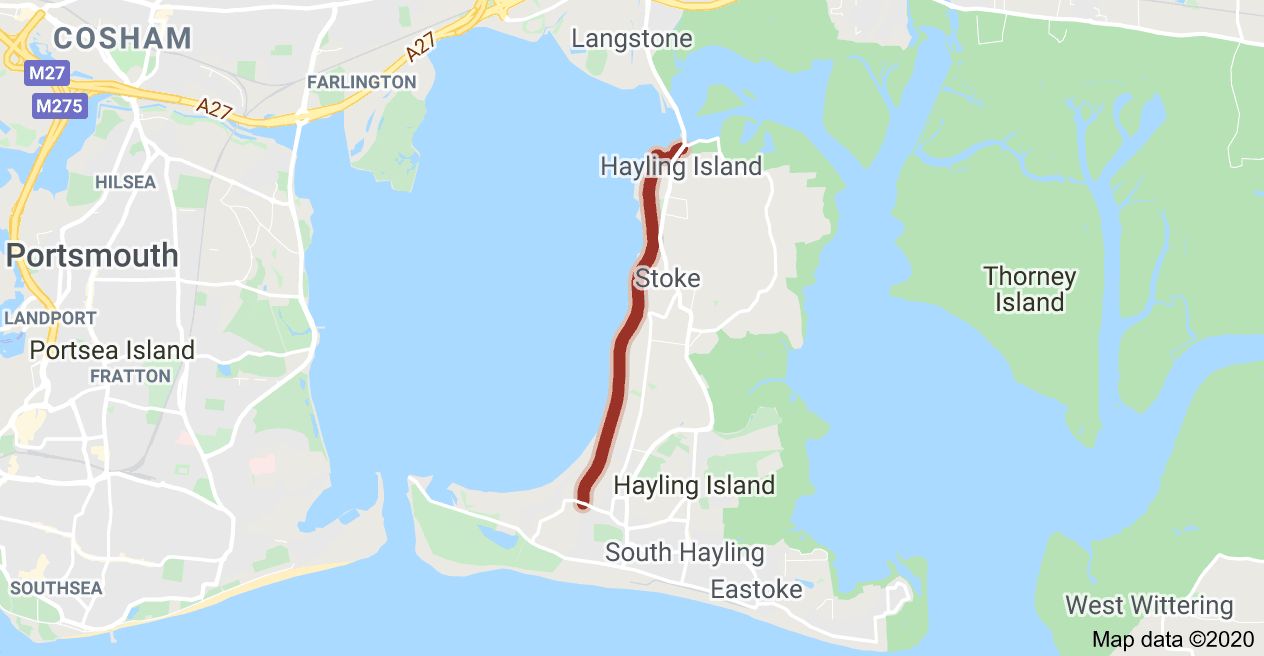
Hayling Island, east of Portsmouth doesn’t have a railway but it used to have one. A four and a half mile long single track branch line ran from Havant on the mainland, to Langston Station on the north east corner of Langstone Harbour (the railway never used the ‘e’), across a wooden swing bridge onto Hayling Island then via North Hayling station down the western shore of the island to the terminus at Hayling Island station near the popular beaches on the island’s south coast. 
What became known as the “Hayling Billy” was opened by the London, Brighton and South Coast Railway (LBSCR) for goods on 19 January 1865, and for passengers on 16 July 1867. The delay for passenger operation being a result of problems with the quality of the line’s construction meaning the Board of Trade inspector initially refused to certify the line as fit to carry passengers. Because of the weight restriction on the bridge over Langstone Harbour it was worked, from late Victorian times to closure in 1963 by small LB&SCR A1/A1X Class locomotives.
Remains of the railway bridge 
Heavily used in the summer by holidaymakers visiting the beaches of Hayling Island in the winter the trains were mostly empty.Nevertheless the line was able to run at a small profit. By 1962 however the bridge across Langstone Harbour needed replacement and British Railways decided this was not a reasonable investment. The decision was taken to close the line and the last scheduled passenger train ran on the evening of 2 November 1963. With hindsight this was probably a poor decision. Anyone who has sat in the interminable summer traffic queues getting on and off the island over the single road bridge would probably consider that keeping the railway would have been worth the required investment. Too late now, the bridge was dismantled and the track lifted in spring 1966.
Restored signal post
So you can’t ride on a train on Hayling island but you can walk the route (the part on the island at least) so that’s what I did on a dry but very windy Sunday afternoon. The island section is now a combined footpath, bridleway and cycleway. It has recently become part of route 2 of the National Cycle Network and called the Hayling Billy Trail. Just after the road bridge on the right is a small, busy car park with a tight entrance which serves as the trail starting point. Fortunately there was one space left.
A path from the car park leads to the south end of the bridge to the mainland, the remains of which are visible looking back towards the site of Langston Station. Here also is a restored semaphore signal post reinforcing that this is a disused railway line. You then back-track and follow the course of the line south.

Site of North Hayling Station
You can as I did take the detour via the former oyster beds which returns to the trackbed at the site North Hayling Station, nothing of which is now apparent. Here there was a sign saying that the next section was currently unsuitable for cycles due to drainage problems and indeed there was a fair sized part of the track that was flooded but as everyone knows cyclists cannot read - or choose not to. Walkers could pick their way around the flood on the raised bank on the seaward side. 
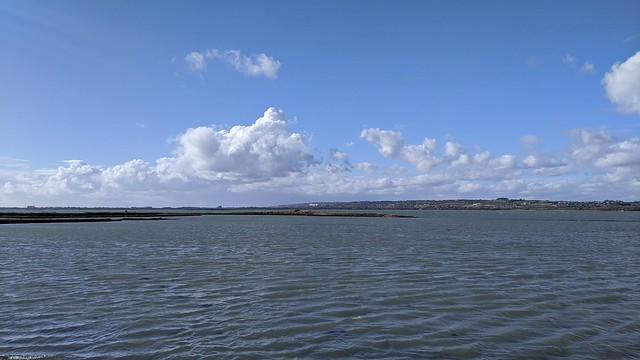
The route hugs the water side so there are good views across Langstone Harbour to Southsea and Portsmouth with the Spinnaker Tower being clearly visible. This also means it’s exposed to the elements which today meant a strong southwesterly wind. There isn’t much obvious in the way of railway “remains” though. The trail ends in West Town about 750 metres from the sea front where Station Road runs into Sinah Lane. Hayling Island Station was demolished but the former goods shed survives as part of the Station Theatre and is quite clearly a bit of railway architecture.
Former goods shed, Hayling Island station
If I could have worked out if, when, and from where the buses ran I’d have ridden back but instead I walked under a darkening sky that shortly unloaded a squall of horizontal rain and hail. This eventually passed and I was treated to an impressive rainbow. Which ws a little compensation for still being rather damp when I got back to the car park. At least the nearby petrol station has a Costa - a proper one with a counter and attractive baristas rather than a self service machine. It also has cheap fuel which is against the usual trend of anything on an island being more expensive. I filled up with flat white and unleaded before heading home.


Here's a Flickr Album of photos from Hayling Island
Hayling Island

Tuesday, 25 February 2020

Norwich, Norfolk 'n good.

7th February 2020
Hmm, seems to have taken me a couple of weeks to get around to writing about my quick trip to the unofficial capital of East Anglia.Probably because it was something of a curate’s egg.

I had hoped to get a ride on one of Greater Anglia’s shiny new Stadler trains but this was not to be and my 1st Class (only because I had some compensatory vouchers to use up) off-peak return only got me a seat behind a Class 90 on a train with no working toilets, a lot of rattles, and an internal carriage end door that wouldn’t shut, resulting in a fresh breeze at each station stop. On the way back it was two mis-matched 4 car Class 321s with no catering. For my first experience of GA this wasn’t impressive.
At least the sun was shining when I arrived.
The Premier Inn is handily just across the River Wensum from the station although getting to the entrance entails finding your way around the back and through a car park and drop-off area. If there’s a segregated pedestrian route I saw no sign of it. Comfortable room with a river view across to the station, shame the free Wi-Fi was buggered. I went out to find something to eat.

I have as a solo traveller been into pubs in a lot of cities in the UK and never had a bad experience or been made to feel unwelcome. Norwich, or at least the Woolpack Inn on Golden Ball St. proved to be an exception. It started off ok, I had fish and chips and a pint both of which were more than acceptable and having eaten I was considering getting another pint but it wasn’t to be. Mrs Chatham-face-lift and family entered, removed the reserved after 6pm sign from a nearby table planted themselves down and ordered food. Shortly the musicians arrived to set up, which is why the tables were “reserved”, they were to be moved to provide a stage area. Good, I like live music in pubs. This gave Mrs CFL a problem though, she couldn’t find another table so she marched up to me and rudely asked “how long do you expect to be sitting there?”. She regarded my reply as “fucking uncooperative” apparently and wandered away only to return, plant her two Midwich Cuckoo look-a-like kids and inbred husband at my table and informed me that "we’re going to sit here now and have our meal”. I pointed out that this was rather rude so she shouted in my face “yes it is, so what?”. As the Woolpack staff didn’t seem interested I fucked off to find a decent pub. That she didn’t get the remains of my pint in her nail-hard face is only because I hate to waste beer but it was a close run thing. I was reminded of the expression “Normal for Norfolk” but that might be unkind, she looked more like she was from a couple of counties further south. This incident slightly overshadowed my mood for the rest of the trip.
The Ribs Of Beef on Wensum Street however was much more welcoming and had a terrific range of beers and ciders. If you’re in Norwich go there instead.
Returning to the hotel it was obvious that it was in the nightclub and late night kebab-house centre of Norwich but in spite of that I had an undisturbed night’s sleep.

The next morning I eschewed Premier’s overpriced breakfast, checked out, and headed to the market. There are few better markets than the one in the middle of Norwich and few better sausage and bacon baps than the one I got from Debs, which I ate sitting in front of city hall watching the activity in the market below and fending off the feral pigeons.


Suitably fed and watered I spent the next few hours exploring Norwich city centre’s ancient streets, which I’d previously only done briefly, being then accompanied by family and dogs who weren’t up for such aimless wandering.


After visiting the really impressive Cathedral I took a walk in the unseasonal sunshine - good timing as Storm Ciara arrived the next day - along the riverside and had enough time for a cheeky pint on the riverside terrace of the Compleat Angler before crossing the road to get the train home.

Sunday, 19 January 2020

Clifton Rocks Railway

Sunday 12th January 2020
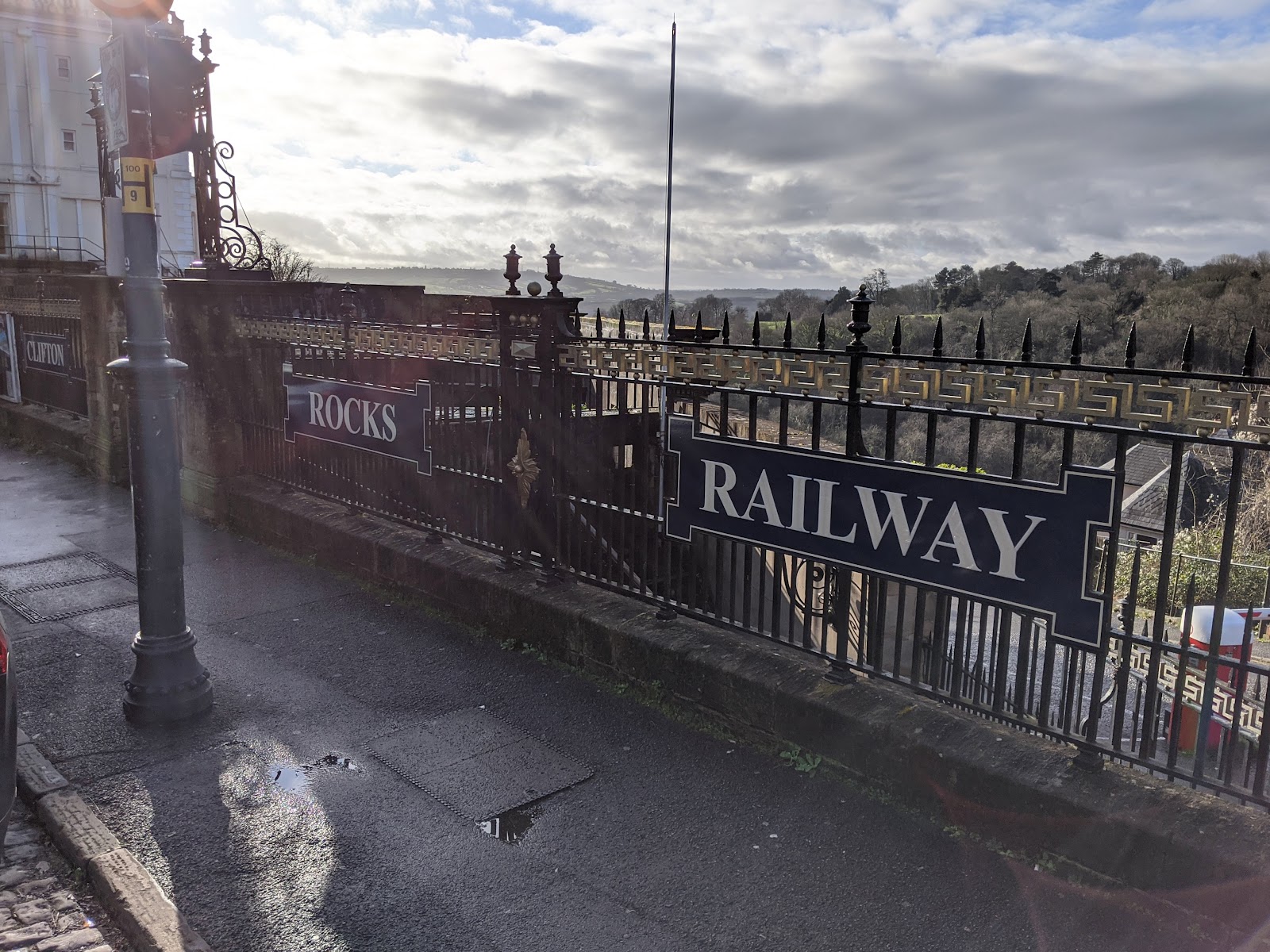
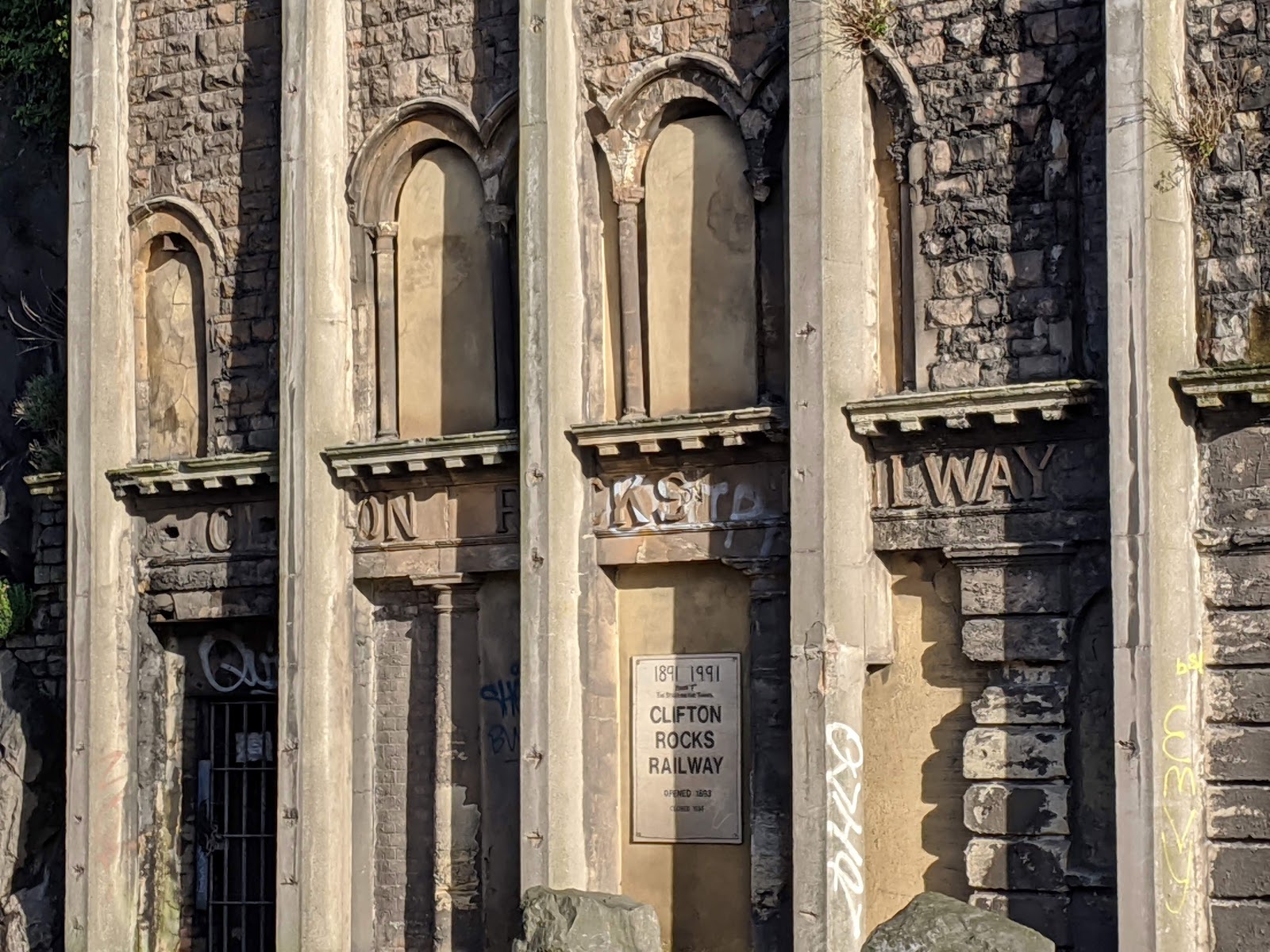
While looking at the map around Clifton Suspension Bridge something else of interest sprang off the page. In Sion Hill a little south of the suspension bridge was marked “Clifton Rocks Railway”. Searching the web revealed a disused funicular railway. In a tunnel. I had to go and have a look obviously.
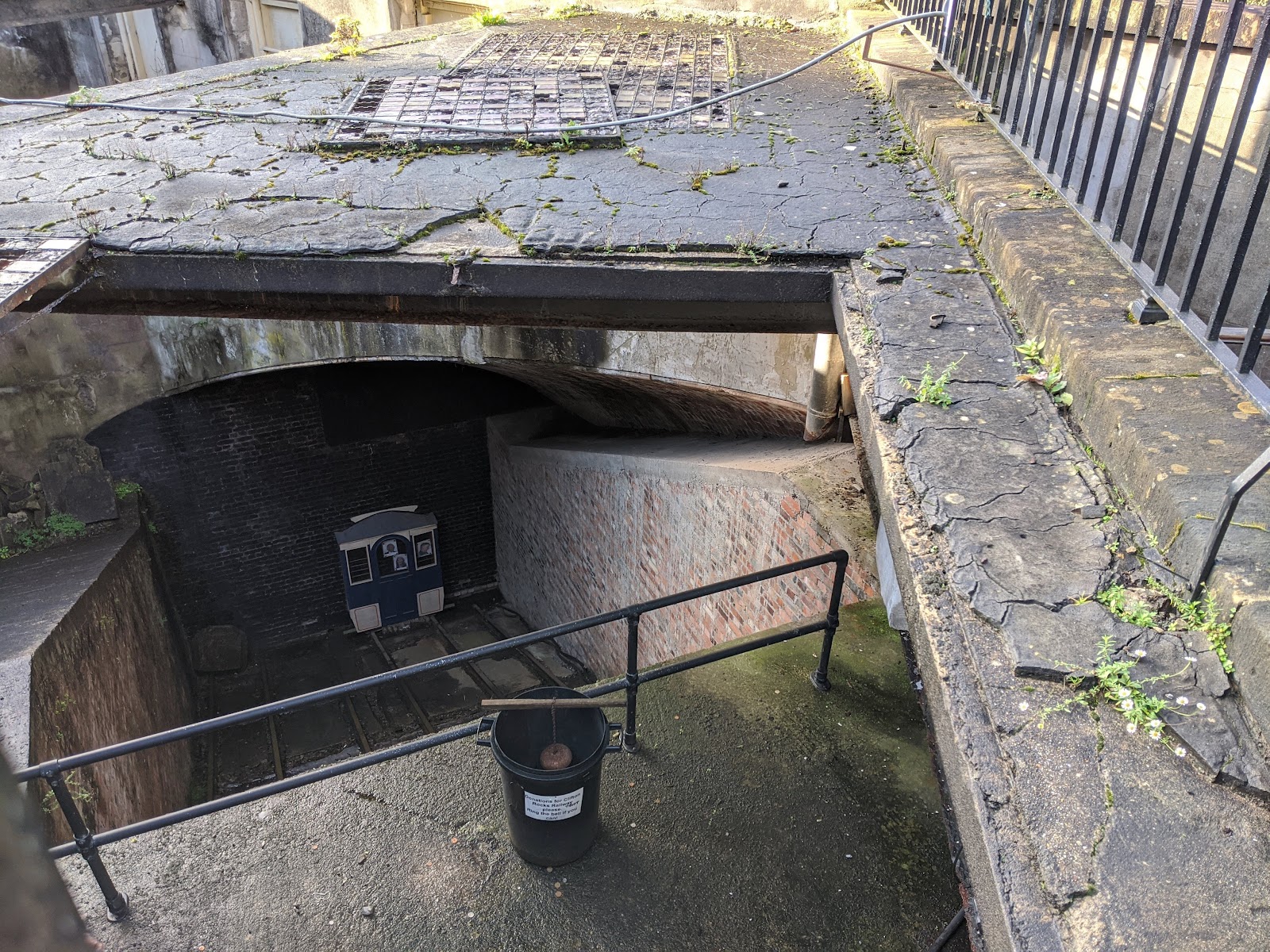
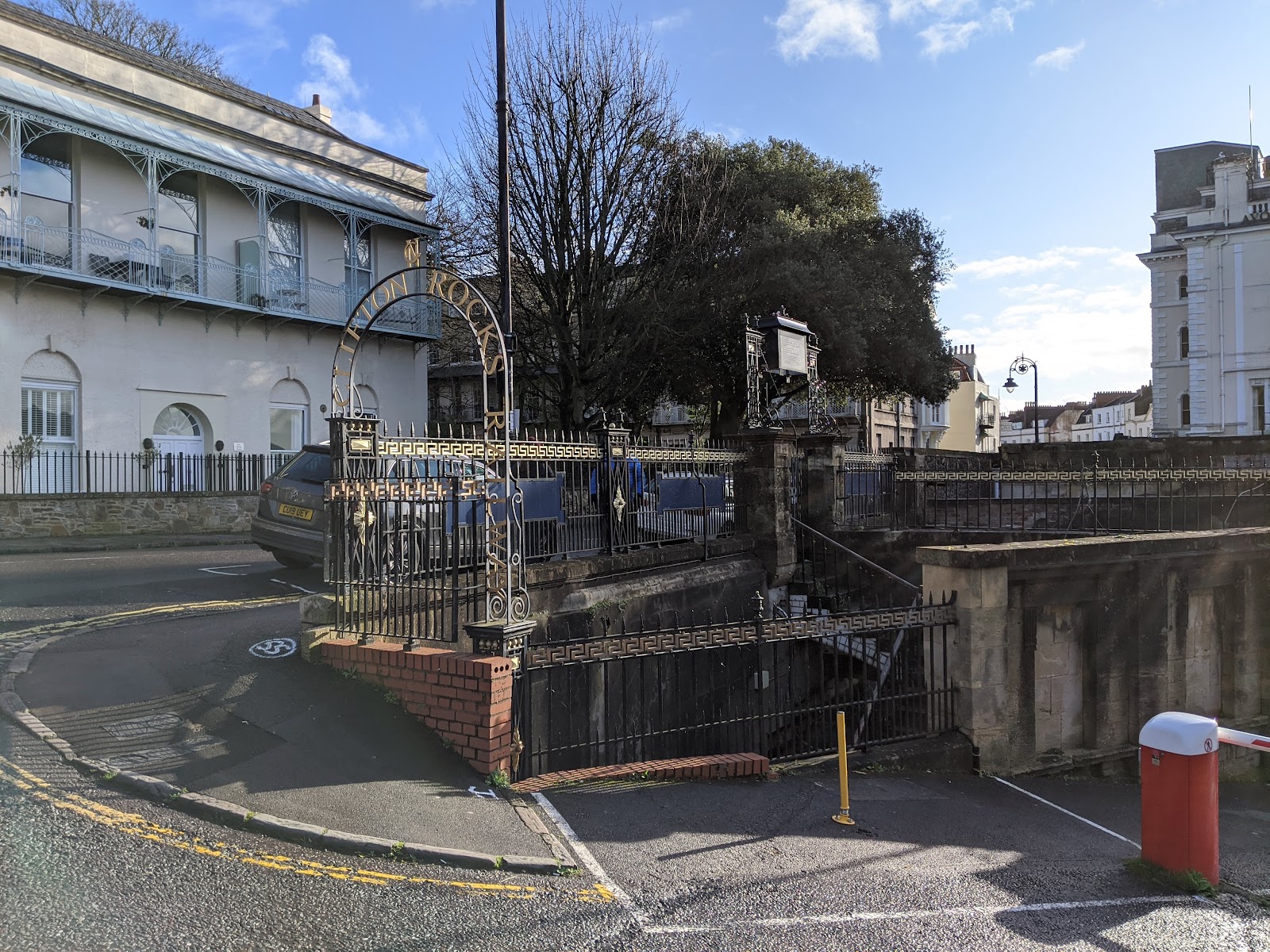
The former top station is next to the Avon Gorge Hotel and is where there is most to see from the street. There were two entrances for passengers which lead down to the ticket hall and platforms below street level and you can look down through the iron railings into this area. A gap in the old awning of glass and iron pavement lights allows you to throw donations into a dustbin with a bell in. These donations go to the Clifton Rocks Railway Trust which has been formed by a group of volunteers to restore the Railway. Not as a working railway unfortunately as subsequent re-use of the tunnels since the railway closed in 1934 make that an impractical proposition.
The railway opened in 1893 it had taken two years to build and cost £30,000 -twice as long and three times as much as originally planned. (Sound familiar?)
The tunnel is 500 feet long rising 240 feet at a gradient of 1:2.2. Semi-elliptical and lined with bricks it is 27 feet 6 inches wide andv18 feet high with two pairs of tracks allowing operation of four cars, in pairs connected by steel cables.
The cars were raised and lowered by means of adding or removing water from tanks under the car floors to balance the weight of car, passengers, and water tank so that the upper car going down pulled the lower car up the incline.
The railway was very popular on opening but that didn’t last and in 1908 it went into receivership, being purchased by the Bristol Tramway and Carriage Co.
In 1922 The Portway road (now the A4 Hotwell Road) was widened. This required the closure and demolition of the Bristol Port and Pier Railway from Sneyd Park junction up to and including the Hotwells terminus, leaving the Rocks Railway somewhat isolated. Also having a major road placed only inches from the bottom station made, and still makes, access difficult.
That rather heralded or at least hastened the end for the operation of the Clifton Rocks Railway and in 1934 it ceased operations.
This wasn’t the end of the line for the tunnel though. Well it was the end of the line as a railway obviously but five years later the tunnel, like so many others, got a new use.
At the outbreak of the Second World War the Ministry of Works and Buildings leased the tunnel from the Tramways Company. In March, 1940. British Overseas Airways built an office suite and used part of the upper tunnel for storage. The ARP (Air Raid Precaution) Committee established air raid shelter number 1898.
In 1941 the four cars which had remained at the bottom of the tunnel since the railway closed were removed and the BBC moved in. They built a complex in the tunnel of four main chambers and three smaller rooms in the bottom station. From the top these contained transmitters, a studio for creating programmes, a recording room to record programmes which also contained enough recorded material for several weeks’ broadcasting, and a control room where eighty GPO land lines to other BBC sites could be switched. 
The three small rooms contained generators, ventilation plant, and of course a canteen because you can’t fight against Lord Haw-Haw without plenty of tea.
In the event the main BBC Bristol studios were never put out of action by the German bombing so the emergency studio at Clifton was never needed but the useful control room alone made the tunnel conversion worthwhile. The BBC continued to make use of the site until 1960 when advances in radio technology rendered it redundant.
In the late 1950s it became apparent that the facia of the bottom station was beginning to part company with the cliff face, a four inch wide crack having appeared between it and the rock face.As a result a series of tied buttresses were constructed along the face of the tunnel in Hotwell Road. These steel sections encased in concrete were anchored to the cliff using inclined anchors connecting the top of the assembly down into the rock behind. This has rather defaced the original facia of the bottom station.
The information above is just a brief summary of that supplied by Richard Hope-Hawkins on the excellent Cliff Rocks Railway website which is well worth visiting if you want to know more. You can also book tours via that site when they are running. I do hope they manage to open the site properly as a tourist attraction, given its proximity to the suspension bridge it surely has great potential.

Thursday, 16 January 2020

A Bigger Boat

Saturday 11th January 2020
Bored on a Friday night in the pub and with a couple of days off work I got to wondering where I could go and what I could visit that would be open at this time of year. Armed with a pint and smartphone I’d soon booked a hotel and a train ticket and on Saturday morning was speeding West towards Bristol on one of Hitachi’s finest. Brunel’s steamship the SS Great Britain my destination. As it was too early to book into the hotel I walked straight from Bristol Temple Meads station to Great Western Dock where the ship lies in dry 
SS Great Britaindock since it was brought back from the Falkland Islands in 1970.
As well as the ship itself the dock site contains two museums, a cafe, and of course a gift shop through which you must pass to enter and exit the site. Alas no cloakroom or luggage lockers so I had to leave my bag with the ticket sales staff behind the counter. It was that or drag it round the ship.
Having coughed up my entrance fee of £17, about average for a tourist attraction in the UK I suppose, a  guide gives you a quick run down of the site and suggested route to take although you’re not constrained to follow a set path.
First up in a building on the starboard side of the ship is the Being Brunel exhibition. Being Brunel explores the life and legacy of Isambard Kingdom Brunel. This covers the life and achievements of one of the greatest engineers of the 1800s. He built bridges, tunnels, ships and railways that were longer, faster and bigger than anyone before. Brunel was also an innovator, a dreamer, an artist, and frequently a gambler with other people’s (i.e. investors) money. Extraordinary, but also human. He had faults and sometimes failures, but he never gave up.There’s a massive figure of the man dominating the exhibition space with his “trademark” top hat and cigar.
Next come back around the stern of the ship and descend into the dry dock to see the underside of the 322 feet long hull and the great iron propeller - SS Gt. Britain was the first large ocean-going ship to have both an iron hull and a propeller rather than paddle-wheels. Also the first iron ship to cross the Atlantic, it took 14 days.
The iron hull has plenty of rust holes and repairs and the dry dock isn’t that dry despite the glass ceiling around the ship’s waterline so the hull is cocooned in a “blanket” of warm dry air (as dry as a desert) fed from ducts and nozzles below. This should prevent it rusting away altogether.
Climbing out of the dry dock (or there’s a lift) you then go through the Dockyard Museum. This takes you back in a reverse timeline from the 1970 salvage operation and return to Bristol, through two world wars, the ships conversion into a sail-powered “Windjammer” cargo ship, and back to it’s days as a luxury liner. 
There’s a huge amount so see here from documents and pictures to machinery such as the propeller lifting gear - the propeller could be lifted out of the water to reduce drag when the ship was under sail.
If you’re the sort of person who likes to dress up in historical costume and have your photo taken you can do that too. I don't, I didn’t.
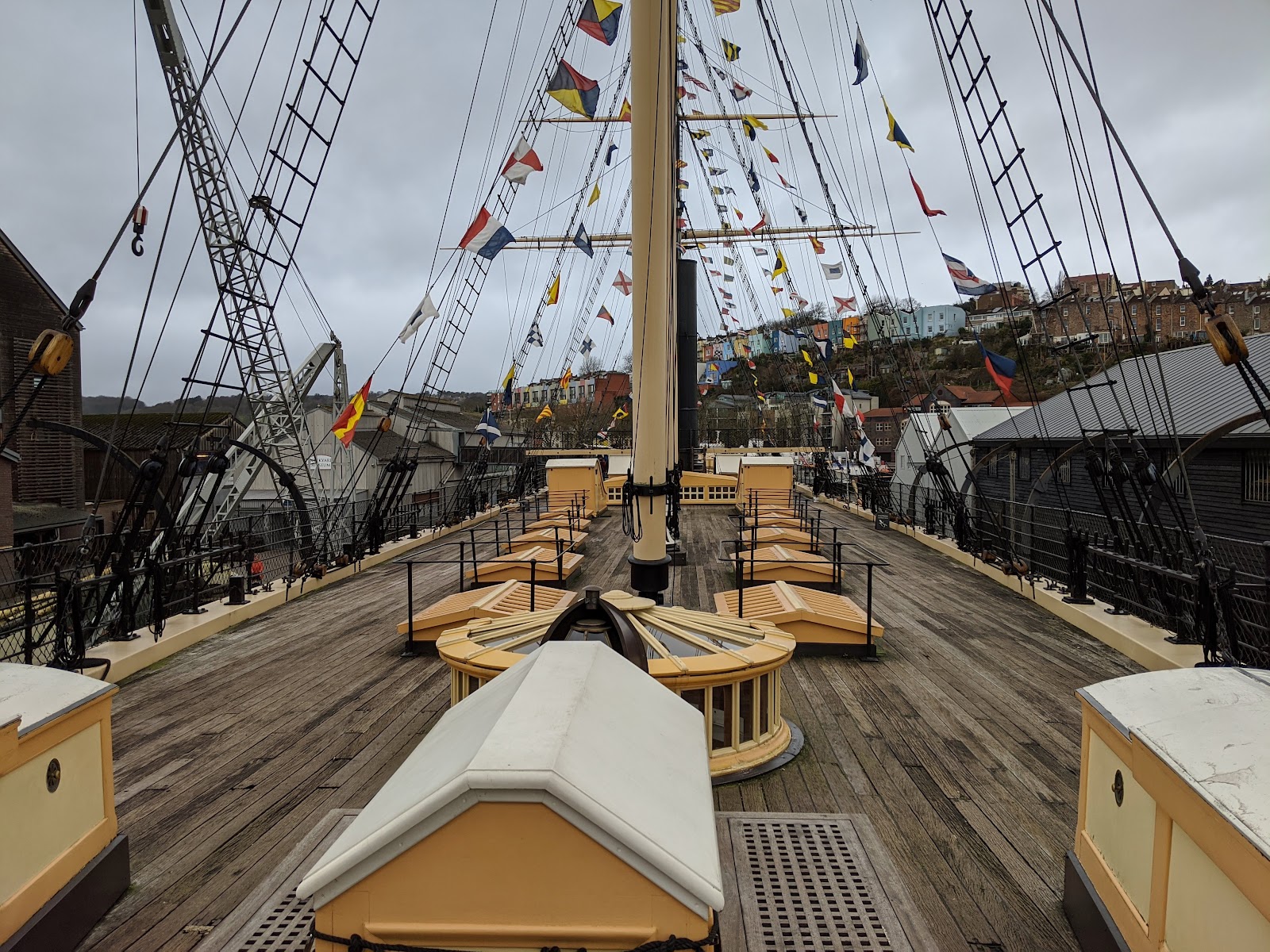
From the 1st floor of the museum you access the SS Great Britain’s Weather Deck. You get a pretty good view of Bristol’s Floating Harbour from the pointy end of the ship and can wander the whole length and breadth of the deck - even crossing the line on the deck beyond which only first class passengers were permitted and who doesn’t like to cross the line occasionally?
Then you open the door in one of the small deckhouses, duck, and go below to the passenger decks. Unless you’re short you’ll be doing a lot of ducking and minding your head from here on. 
The reconstruction of the passenger areas is superb. From the opulent dining saloon, through the first class cabins, doctors, bakers, butchers, and kitchens through to the cramped 3rd class or “steerage” accommodation. All atmospherically lit, populated by life-like mannequins, and with sound effects which enhance rather than intrude.
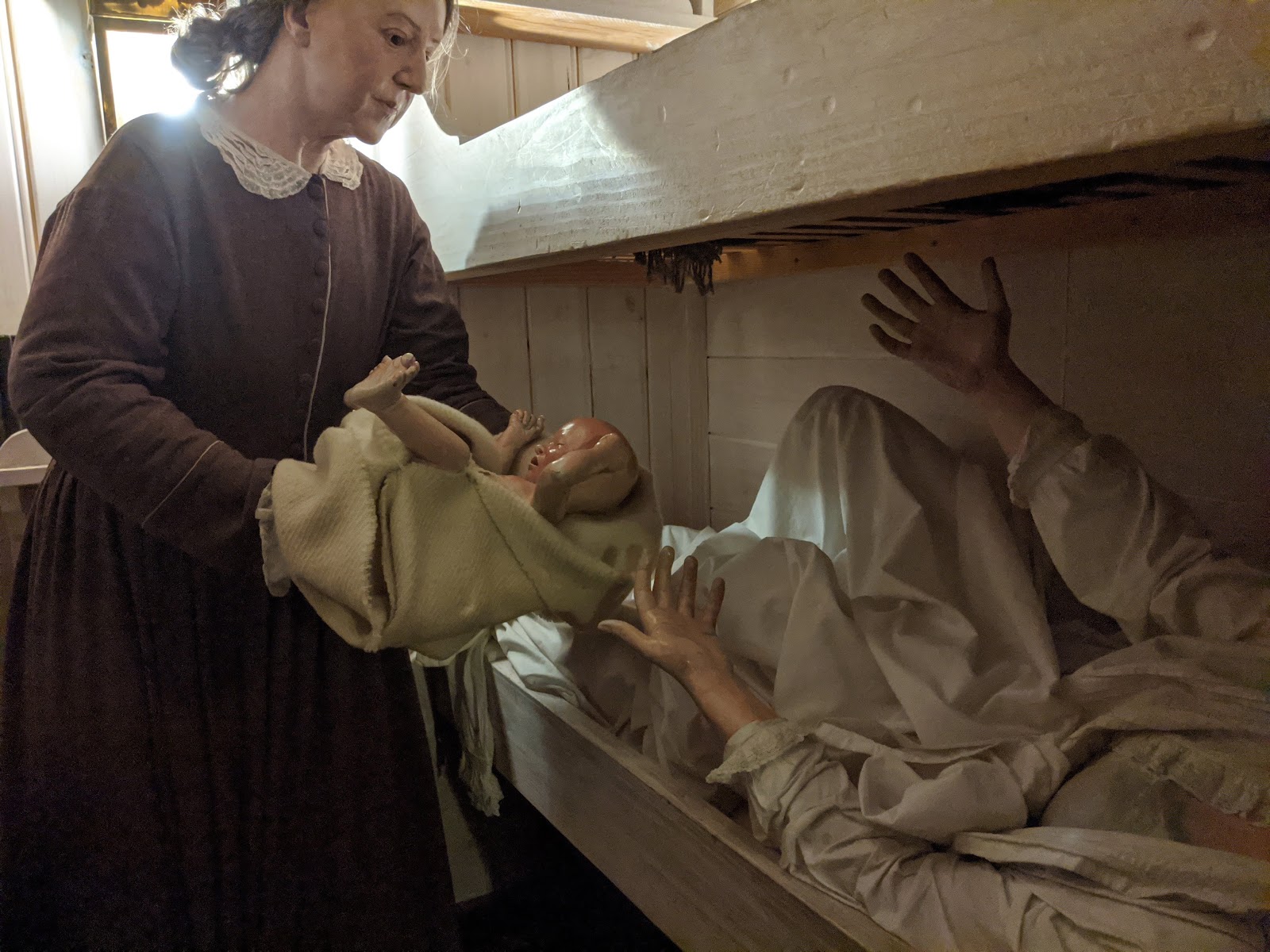
Better still none of this is cordoned off or behind perspex screens. There are many scenes of life on board as it was in the 19th century and you can get right in amongst it all. It’s one of the best museums I have ever visited. And there’s a fair dose of humour here too, as you’ll find if you try to open certain cabin doors!
Of course it helps that this is a reconstruction so it’s only the ship’s structure that needs to be conserved not the interior but it does make a change from the restrictions found in most historical sites.
They’ve also installed replicas of the two steam engines amidships, which slowly turn, showing how the drive to the propeller shaft was conveyed from the engine via huge wrought iron chains.
And there are the cargo holds, depicting their use as stables for the cavalry when the Great Britain was used as a troopship carrying soldiers to the Crimean War and the Indian Mutiny.
I really enjoyed my visit, helped of course by the fact that being January even on a Saturday afternoon it wasn’t crowded. I might even return at some point as the £17 ticket is valid for a year, as is common with many tourist attractions now.
A decent cup of tea and a very nice piece of cake was to be had in the Harbourside Kitchen cafe before I headed for my hotel.
Brunel's SS Great Britain is billed as Bristol's number one visitor attraction and it’s hard to disagree. Go if you can. Take lots of photos, I did:
SS Great Britain

Wednesday, 8 January 2020

Walking on a disused railway viaduct.

Saturday 4th January 2020
Viaduct Way, Winchester.
About 2.6 miles, around an hour, mostly flat and good surface.
The main event of this little walk is the Hockley Viaduct, which was built in the late 1880s by the London and South Western Railway(LSWR) to provide a link over the River Itchen and water meadows, from the Didcot, Newbury and Southampton Railway(DN&SR), to the LSWR's main line. The DN&SR was originally intended to continue down the east side of the Itchen to Southampton, but had run out of money at Winchester. The viaduct crossed the valley to link the DN&SR to the LSWR, which still runs down the west side of the valley.


I started off at the South Winchester Park and Ride Car Park, exiting up the ramp onto Otterbourne Road and walking down to the roundabout and then crossing Hockley Link to pick up National Cycle Route 23 by the railway bridge (Sheep Wash bridge) over the South West main line.

It might be quicker to come out of the main car park entrance but this way you get a really good view of the viaduct that you’ll shortly be crossing.

Beyond the viaduct you can see the M3 motorway where it enters its cutting through Twyford Down. Was it really 28 years ago that Group 4 Security and the Dongas Tribe were fighting over that hill?

I followed the path around to the left until it met the road again and found the start of the Viaduct Way (or end of if you’re following the official guide).
The railway viaduct is not very far from the start/end of the path.

The viaduct was last used by the railway on 2 April 1966. The line it carried closed as a result of the Beeching plan but the whole structure remains standing and is open to walkers and cyclists. Since 2013 following restoration it forms part of the National Cycle Network Route 23.
Though fortunately on a cloudy January afternoon it was mercifully free of lycra-clad lunatics!
There are plaques giving info on the viaduct’s history on the walls along a number of artworks by Nicola Henshaw that reflect the history of Hockley Viaduct and mark the restoration of Viaduct Way.
The other and most obvious thing on the viaduct is this lattice signal post and semaphore signal arm, provided by the Friends of Hockley Viaduct.
I carried on across the viaduct meeting only one or two people - dog walkers and a runner.
There are good views and even the noise fro the M3 which runs parallel to the old railway wasn’t overly intrusive.
Near the northern end the viaduct crosses high over the River Itchen, along will some minor field flooding.
At the end of the viaduct the path bears left and passes under a bridge to run alongside the Itchen Navigation, a 10.4-mile disused canal system
that provided a trade route from Winchester to the sea at Southampton. Completed in 1710 it was known as a navigation because it was an improved river, with the main river channel being supplemented with cuts and locks used to bypass the difficult sections.
It was nver a hugely busy canal and the opening of the London and Southampton Railway in 1840 sealed its fate, and the navigation ceased to operate in 1869.
The remains of St Catherine’s Mill and Lock can be seen on the left of the path, with plenty of water rushing through the sluice this afternoon.
On the right of the path the bulk of St. catherine’s Hill rises 220 feet to a summit with a hill fort. 
Once cut off from the city by the old A33 Winchester Bypass road with the completion of the M3 that was removed and the area replanted as open grassland. 
It seemed to be very popular with local residents and grazing cattle alike and from here on the Viaduct Way was much busier.
Onward alongside the Itchen Navigation until it reached the car park at Garner Rd. where the way turns right, under a bridge beneath the Handlebar Cafe, few of whose customers appeared to have come by bike, and around to the left crossing Garnier Rd. on the old railway bridge.
Along here there are good views through the trees down to the Itchen on the left and not-such-good views fortunately screened by the trees to the right. Car park, household waste site, industrial estates.
Then on the left two hardy tennis players making use of the Kingsgate Lawn Tennis Club courts. I’m no expert (massive understatement!) but I think the ball’s supposed to go over the net.
After the tenns club the way joins Domum Rd. at the end of which I bore right onto Wharf Hill, then crossed over and turned left behind Seagram’s Mill to once again find the Itchen.

The river was flowing high and fast under the mill as it has been wet for weeks.
The last thing you’d want to do would be to fall in because it almost surely would be. Fortunately the river bank is walled and fenced off, the only thing going in the drink being a couple of angler’s bait. I didn’t see anything coming out mind you.
I crossed the river and turned right following it upstream towards the city centre.
On the left of the path are the Pilgrim’s School playing fields, Wolvesey Castle, and the Bishop of Winchester’s palace and Diocesan offices. Not that you can see any of that because of the old high stone wall they’ve built to separate themselves from hoi polloi like us.
A few hundred feet away on the other side of the river is the site of the DN&SR’s Winchester Cheesehill station, later renamed Winchester Chesil, which is a shame as the earlier name is much better. More of a shame still is that it’s now been replaced by the Chesil Multi-storey Car Park.

The way ends at the City Bridge. From there you could cross over the road to National Trust City Mill, which is good or turn left to the city centre which is stuffed with historical buildings. Abbey, Guildhall, Great Hall, and Cathedral (we know a song about that don’t we boys and girls) are the biggest but there’s a lot of ‘old’ in Winchester to look at.

It was also stuffed with January Sales shoppers so I grabbed a coffee and a sandwich then caught the bus back to the park and ride from the stop overlooked by King Alfred.


I’m not the only people I know to have walked the Viaduct Way recently and I may have been influenced by these two who made a video about it.
But I did it in the opposite direction

Here's the usual Flickr Album:
Viaduct Way
Ye Olde Flickr Album

Wednesday, 1 January 2020

New Year's Eve celebrations.

In a different age - around 1980 - for about 3 or 4 years I used to go up to Trafalgar Square to see in the new year. Me and a mate go would up early on the train and get eats and drinks in the West End first, ok yes, a bit of a pub crawl☺️

One year for something to do to fill in the time we went and saw The Last Starfighter in the cinema in Leicester Square. Due to some confusion at the box office we got in for free. We'd usually go and see my uncle who had The Devonshire Arms in Denman Street, just off Piccadilly Circus before heading down to Trafalgar Square for midnight. All very exciting at that age. We stopped going after the year that rozzers clamped down on alcohol in the square and confiscated whatever anyone was carrying, throwing it all into big wheelie bins next to the barriers they'd built across all entrances to the square 😞.

Afterwards we'd walk back through the party-atmosphere of central London to Paddington Station and wait on the station until the first trains started running to get us back home. You'd meet some "interesting" characters at Paddington in the early hours of January 1st. There was at least a 24hr Wimpy close by where you could get a hot drink and watch the young ladies who would occasionally leave and get into a car, returning a while later with more cash than they left with.

For un-ticketted firework watching these days Primrose Hill has a good atmosphere and a clear if distant view of the main firework display as well as others across the city.which is where I went for 2018-19.

Last night however after a day at work I couldn't work up the energy or enthusiasm to get up to Primrose Hill, didn't fancy the local pub packed with people I don't know, and couldn't face the jolly end-of-year TV shows. So 2019-20 involved a sofa, NCIS box set, and lemsip (and a small single malt gifted by a nephew for Xmas).

Which doesn't explain why I still didn't wake up until twenty to twelve this morning...

Tuesday, 31 December 2019

Dead Pool 2020

2019 may have seen the demise of democracy but from my list we lost only Doris Day. So my entry for 2020 (assuming no one else on the list expires in the next five and a half hours) will be as follows:

Charles Elwood “Chuck” Yeager (Pilot & Record-breaker)
Neil Percival Young (Musician)
Leslie Samuel Phillips (Actor & Author)
Gina Lollobrigida (Actress, Photojournalist, & Sculptor)
Kirk Douglas (Actor, Producer, Director, & Author)
James Earl Carter Jr. (39th POTUS)
Vera Lynn (Singer, Songwriter, & Actress)
Philip Mountbatten (HRH The Duke of Edinburgh)
Michael Caine (Actor)
Anthony Dominick Benedetto a.k.a Tony Bennett (Singer)

and may all the above have a happy and healthy 2020.