April 13th
It seems to have stopped raining for the moment, time for a spring weekend getaway. I’ve not been to Bristol since 2020 before the you-know-what so I bought a small handful of rail tickets on Trainsplit and booked a couple of nights in a city centre hotel because I enjoyed Bristol last time and it’s easy to get to. I also had a little mission nearby that I wanted to do.
An emergency track repair on the GWR main line meant a delayed arrival at Bristol Temple Meads but I still had time to go for a coffee before I could check it at the hotel. The coffee was covered by the £3.90 Delay Repay refund I got from GWR though 😀
Bristol is a fairly walkable city so later I went for a stroll around the harbour, had fish and chips for tea (it was Friday night after all) and walked them off (a bit) along the trail around the south side of the Floating Harbour.

Which was thirsty work so I stopped at The Nova Scotia Hotel, an old pub on the Cumberland Basin part of the harbour. After a couple of very nice pints of local beer I walked back in the gathering darkness along the north side of the harbour back to my hotel.

Saturday morning and time for the “mission”. The plan was to take a train to Severn Beach, walk part of the England Coast Path along the Bristol Channel/River Severn then inland to Pilning and catch the rare train back to Bristol. The weather forecast looked good. Well dry anyway.
The train to Severn Bridge was busy to start but as it progressed the passenger numbers dwindled and the views out across the estuary improved and half a dozen or so alighted at Severn Beach station.

From the station I walked through the village of Severn Beach, a minor “seaside” resort whose attractions include a couple of cafes, a bakery, and Wow! a Public Toilet that is actually still open! You don’t find many of those in England. From there I took a path over the ditch, or rhine (pronounced “reen”) as it’s known here, and up onto the river wall.
And bloody hell that’s a cold wind blowing out of Wales! Coat on.

I followed the sea wall along and under the Second Severn Crossing, a.k.a. the Prince of Wales Bridge, which carries the M4 Motorway to and from Wales, supplementing the 1966 Severn Bridge which can be seen further upstream. The tide was partly out and the path along the concrete wall was littered with bits of tree, some quite large, washed down from inland.
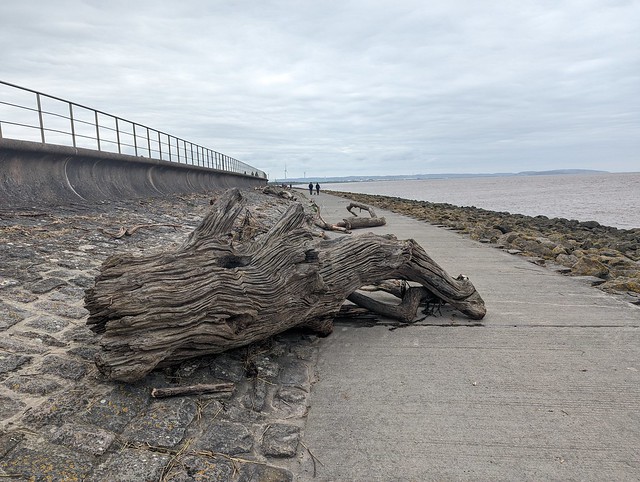
After passing under the M4 and I reached New Passage Pier. This used to have a railway terminus and ferries across the Severn before the 4.4 miles long Severn Railway Tunnel superseded them in 1886. There is an information board at the point where you walk over the site of the tunnel. Beyond New Passage I turned inland to follow the Severn Way along The Pill river but soon and to backtrack because someone had let the cows out. The cows themselves weren’t the problem, the fact that the ground wasn’t yet firm enough to support them was since they had puddled the surface into an impassable quagmire and when the mud reaches over the top of your boots it’s time to change your plans. Even the cows didn’t seem to be enjoying the conditions. I re-routed via New Passage Rd. crossing the M4 in what according to the signs visible from the over bridge appears to be a no man’s land between England and Wales, and after a couple of miles reached Pilning. Well to be accurate I reached The Plough, where I was glad to have time to enjoy a pint of Wadworth’s and where they didn’t seem to mind the mud splattered apparition that just left a visible trail in and out of their saloon bar.
Pilning Station
Pilning is a formerly quite important station on the South Wales Main Line between Cardiff and Bristol. Potentially it could be an important transport hub for the surrounding area. Currently it’s the ninth least used station (2022-2023 figures) in England though due to under investment, poor management, and reduction in services that looks very like an attempt at closure by stealth. Until 2015 there were two trains a day, one in each direction. In 2016 that was reduced to two a week, the minimum permitted under the operator’s franchise. In November 2016 as part of the Great Western Mainline electrification the footbridge to Platform 1 was removed and the decision made not to pay to replace it. So now the two trains a week run in the same direction, towards Bristol, on a Saturday timetabled at 0832 and 1532. To make a return journey from Pilning you need to leave early in the morning and return early in the afternoon travelling to Severn Tunnel Junction and then back to Pilning. It being Saturday and GWR it’s not unknown for the trains to be cancelled. You can see why the locals are not happy. The publicity around the above has, because UK rail enthusiasts being what they are, resulted in something of an upturn in passenger numbers though and Pilning refuses to die. I added 1 to the statistics. Why? Because it’s there of course.

Fortunately I only needed to make a single journey from Pilning to Bristol Temple Meads, cost with a railcard £3.60 and scheduled to take 20 minutes. Why the 37 minute trip from Bristol Temple Meads to Severn Beach earlier only cost £1.35 is a mystery known only to the gods of the UK rail ticketing system. I arrived in good time to take a look around. There’s not a lot to look at.
One platform, unlit because no one would replace the unsafe lighting and so trains cannot call after dark. One small shelter with a seat. This was actually occupied on my visit by the other two passengers travelling from Pilning that afternoon!

An information point and a train times poster pretty much completes the set. There’s one station name sign ideal for selfies wearing your “#footbridge4pilning” tee shirt. No, I’m not sharing it here 😜
A couple of trains passed through while I was waiting, one in each direction. There’s no train departure board at Pilning obviously so I was keeping an eye on the Train Track app on my phone - fortunately something Pilning does have is a decent mobile signal. So I wasn’t entirely surprised to see that the 1532 train was now shown as “Delayed” with no estimate of when I might arrived. Told you, GWR + Saturday. Eventually it’s ETA was given as 1546 which kept moving away until 1549, which is when it finally appeared.
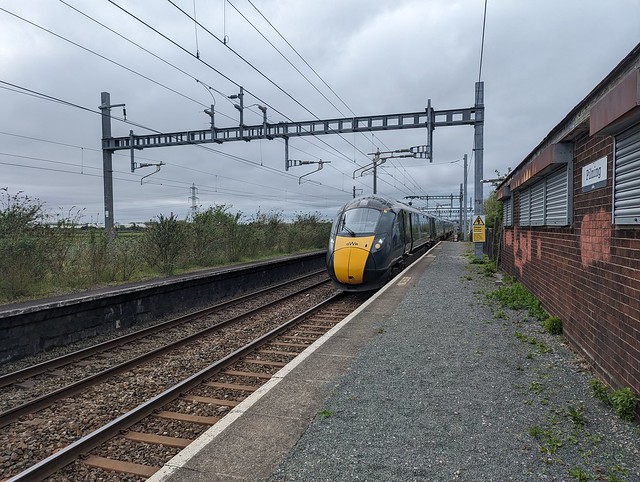
This train from Cardiff Central to Penzance in Cornwall had left Cardiff late and was quite well loaded. Interestingly I had a seat reservation, Coach C Seat 78, but although the seat was vacant that was only luck since the reservation wasn’t shown on the on board display above the seat. (GWR+Saturday again?). Anyway it got to Bristol Temple Meads 19 minutes late so I got a refund of… 90 pence. Not enough for a coffee sadly.
Pilning ✓
I headed into Bristol city centre to buy a brush to remove at least some of Gloucestershire from my boots and jeans and then get something to eat. I had intended to return to the Nova Scotia later but frankly I was knackered having totted up a dozen miles walking and fortunately I had made provision in the handy fridge in my hotel room for such an eventuality. And that’s a really big television at the foot of the bed to fall asleep in front of.


 The former top station is next to the Avon Gorge Hotel and is where there is most to see from the street. There were two entrances for passengers which lead down to the ticket hall and platforms below street level and you can look down through the iron railings into this area. A gap in the old awning of glass and iron pavement lights allows you to throw donations into a dustbin with a bell in. These donations go to the
 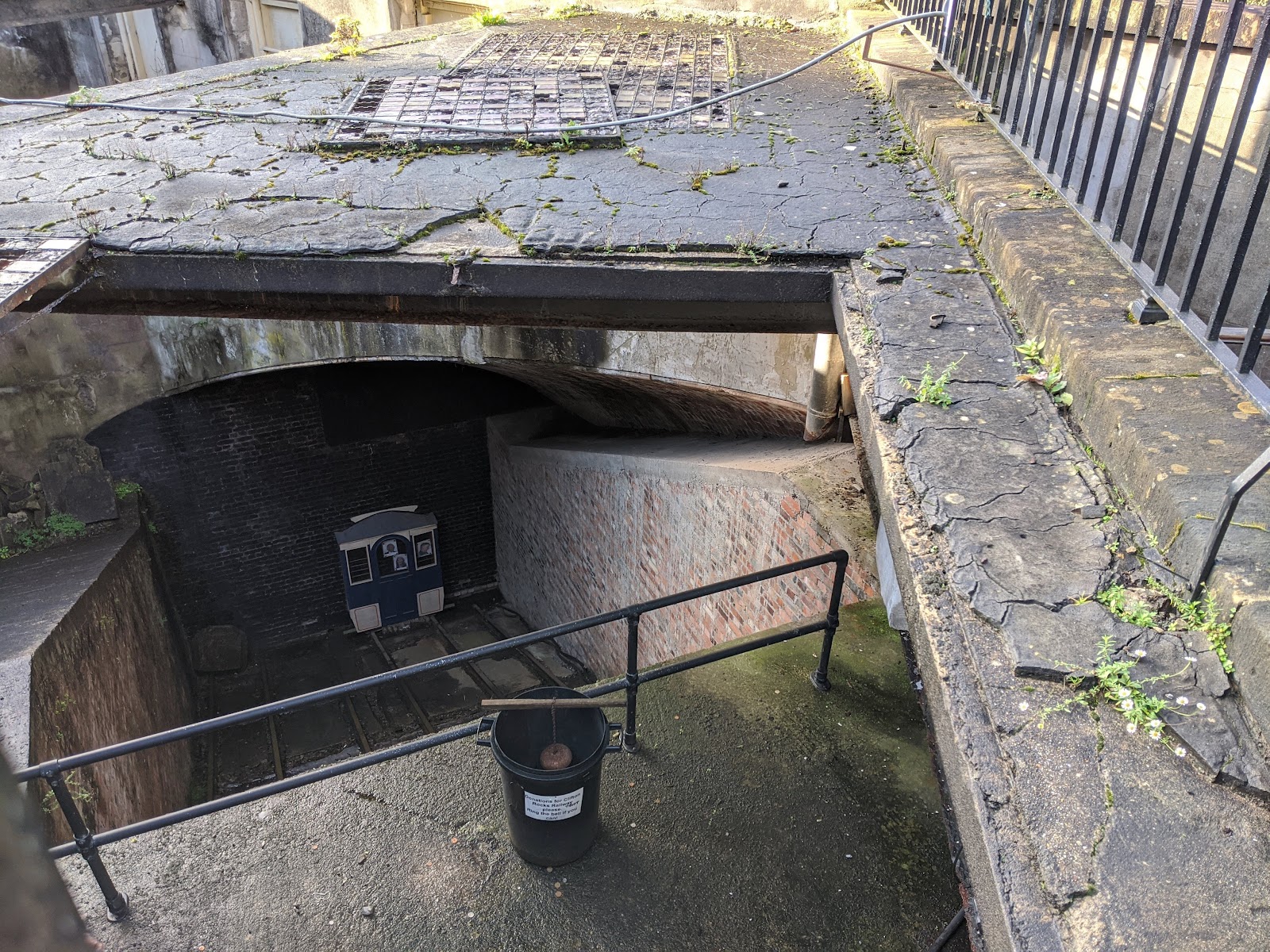 The railway opened in 1893 it had taken two years to build and cost £30,000 -twice as long and three times as much as originally planned. (Sound familiar?)
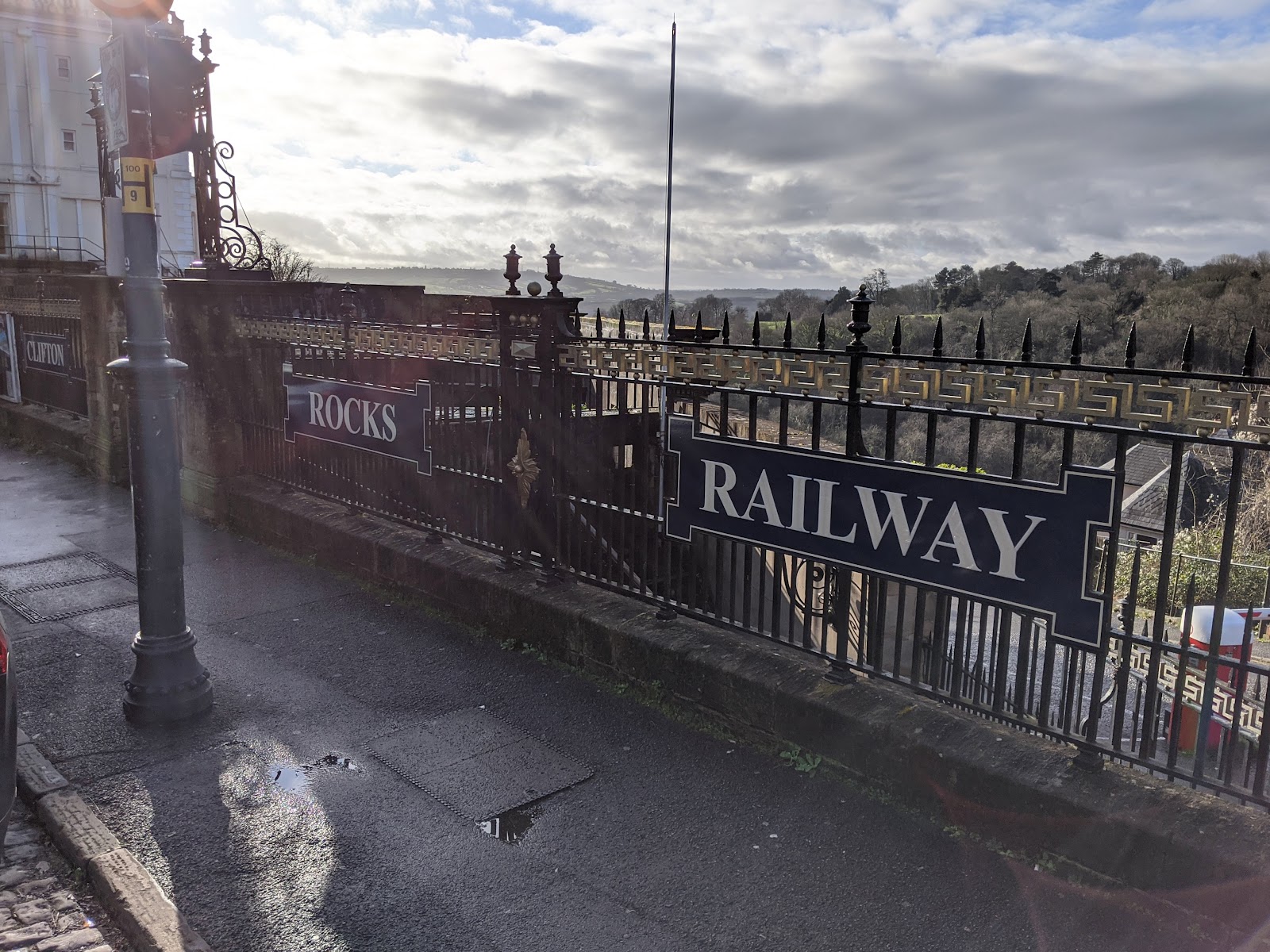 In 1922 The Portway road (now the A4 Hotwell Road) was widened. This required the closure and demolition of the Bristol Port and Pier Railway from Sneyd Park junction up to and including the Hotwells terminus, leaving the Rocks Railway somewhat isolated. Also having a major road placed only inches from the bottom station made, and still makes, access difficult.
 This wasn’t the end of the line for the tunnel though. Well it was the end of the line as a railway obviously but five years later the tunnel, like so many others, got a new use.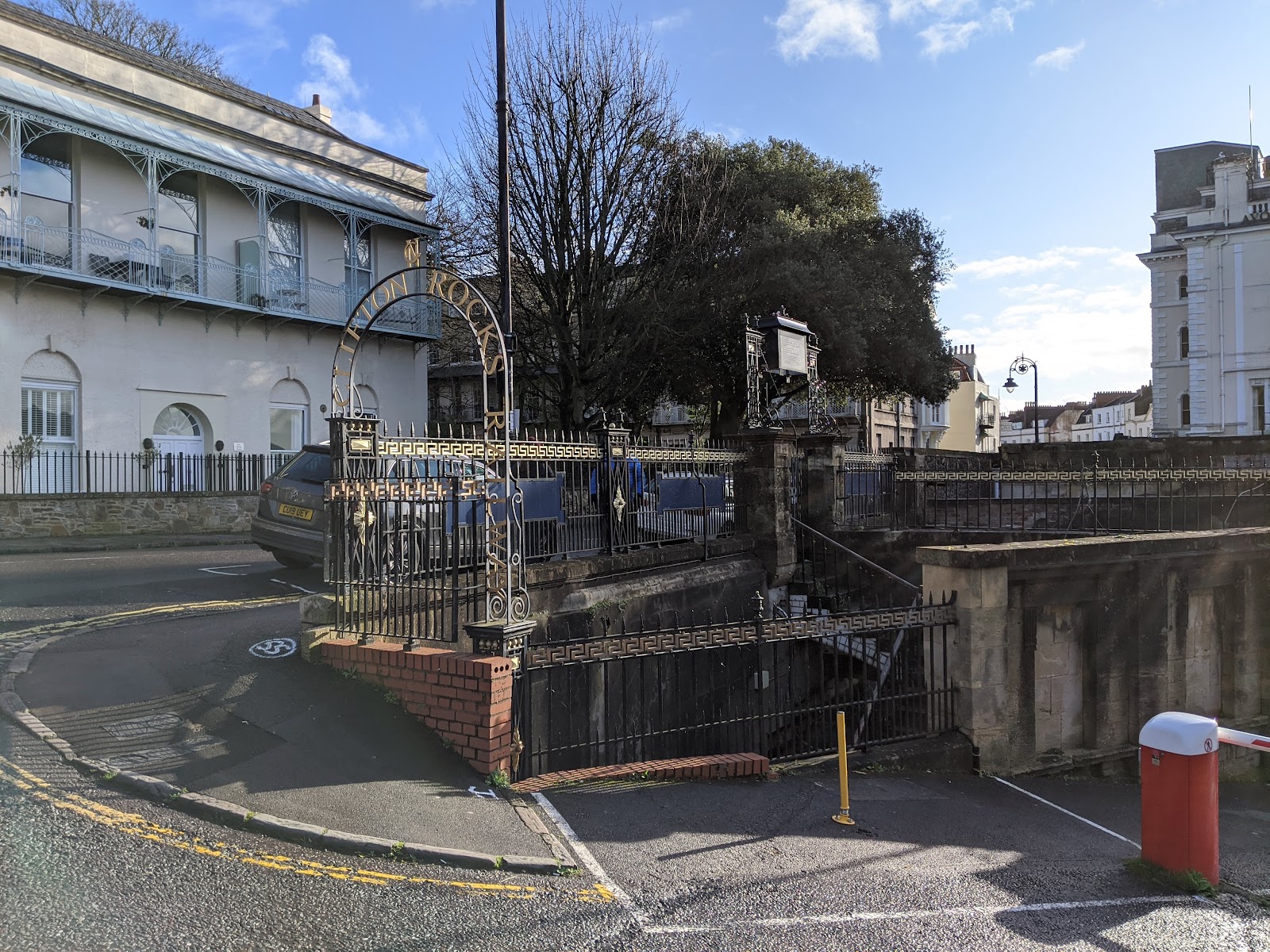
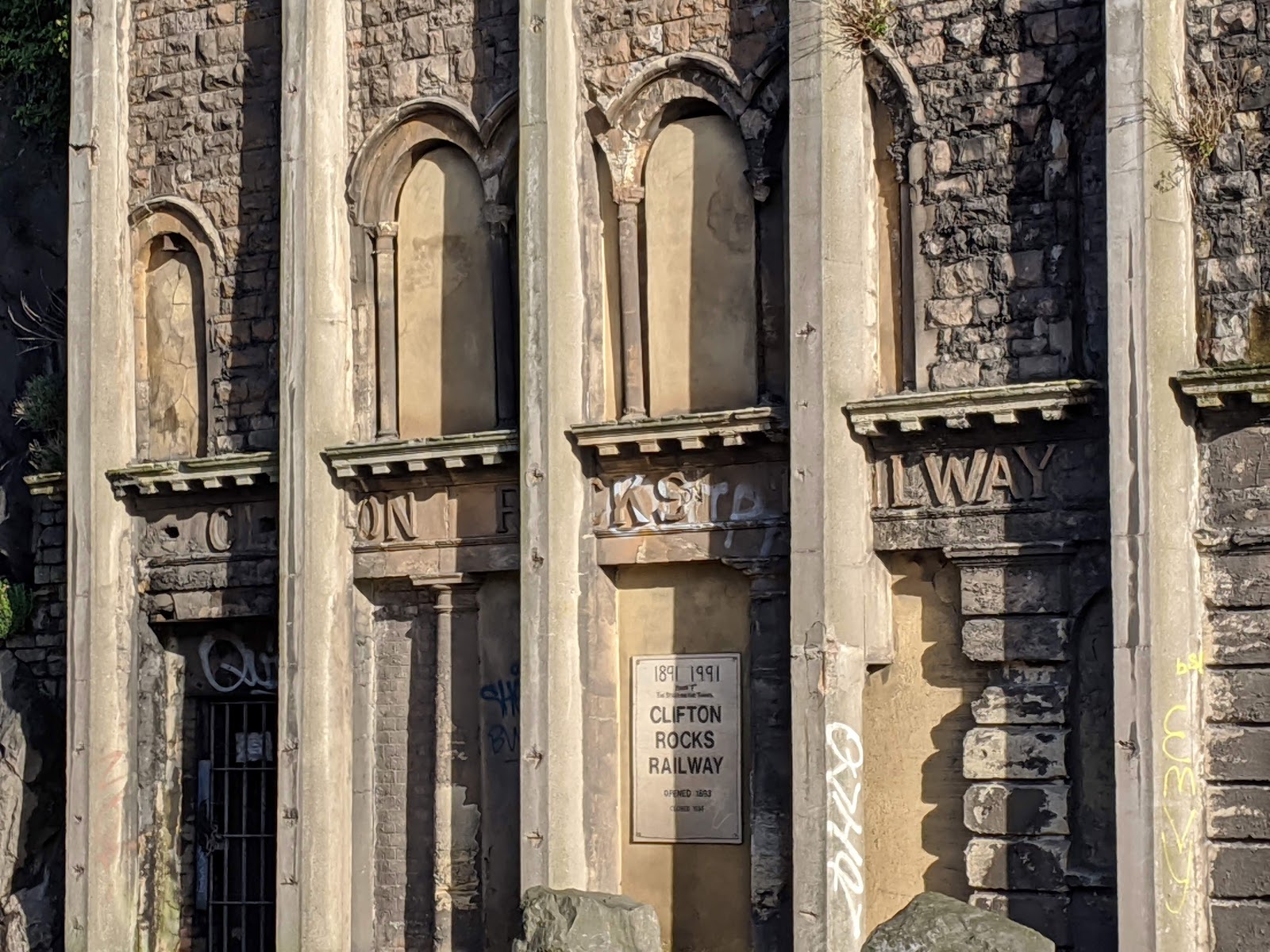 In the late 1950s it became apparent that the facia of the bottom station was beginning to part company with the cliff face, a four inch wide crack having appeared between it and the rock face.As a result a series of tied buttresses were constructed along the face of the tunnel in Hotwell Road. These steel sections encased in concrete were anchored to the cliff using inclined anchors connecting the top of the assembly down into the rock behind. This has rather defaced the original facia of the bottom station.
 dock since it was brought back from the Falkland Islands in 1970.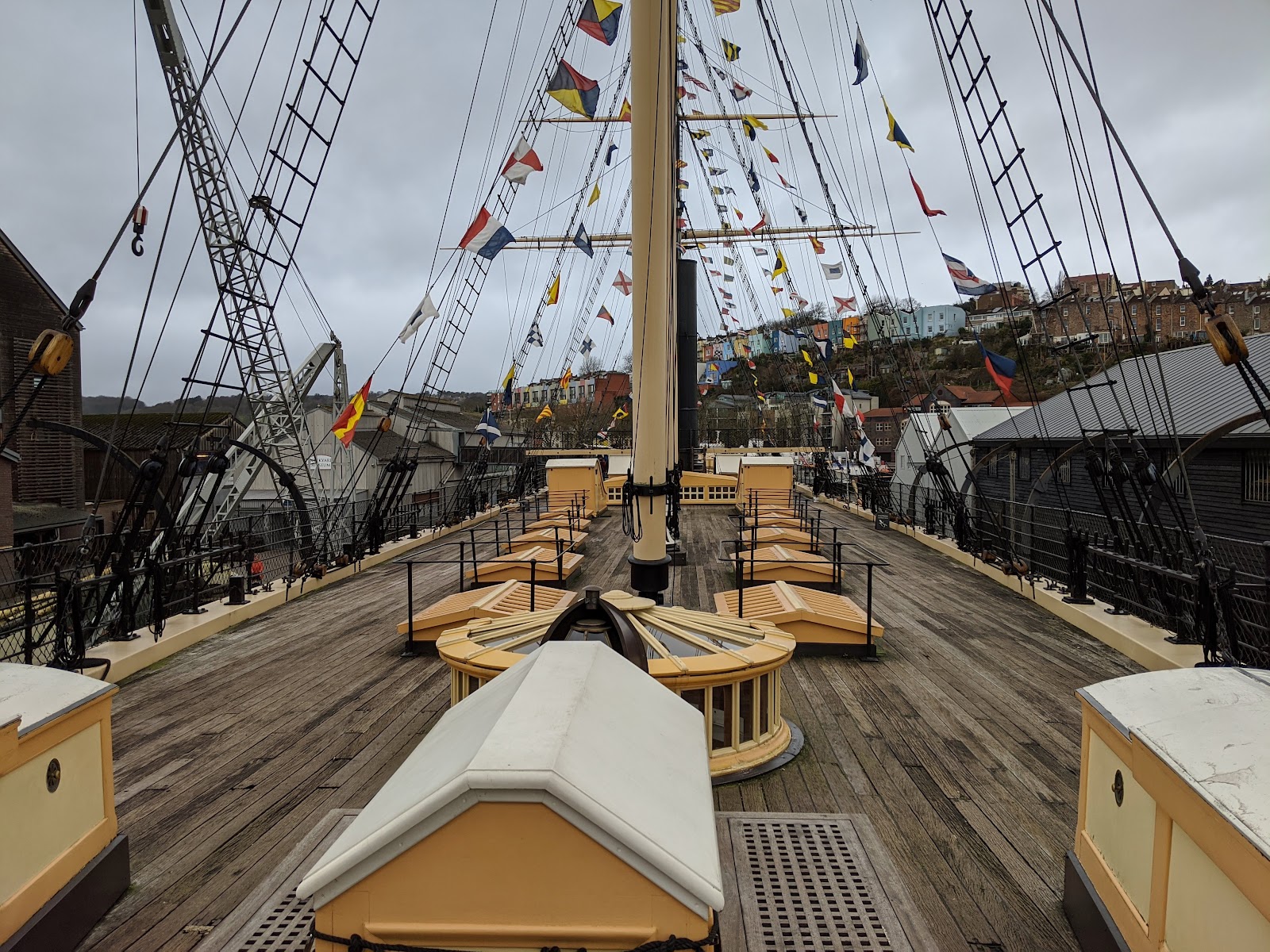
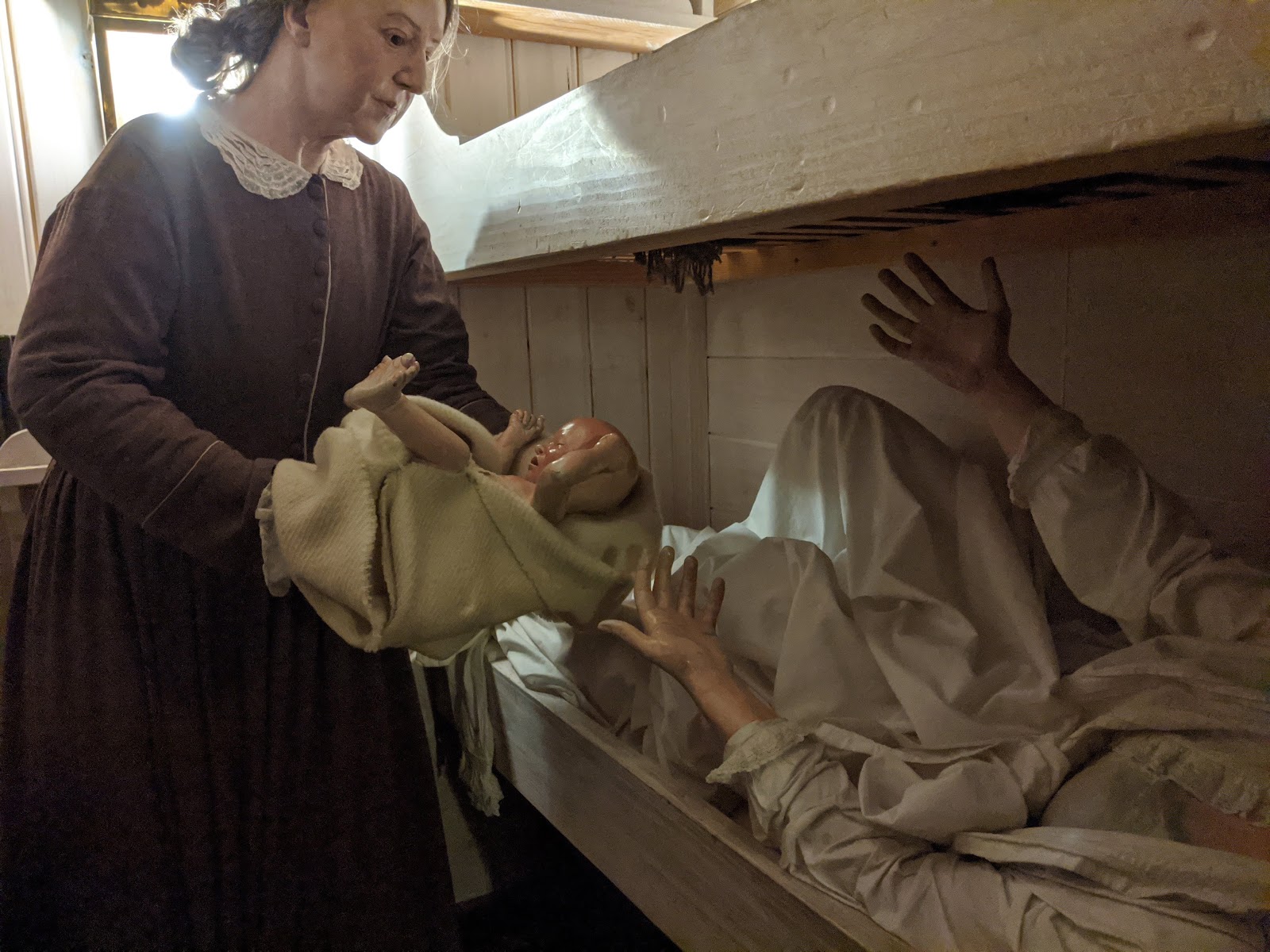 enhance rather than intrude.