Thursday, 3 February 2022

Farnham, Surrey.


Wednesday 2nd February 2022

Farnham is a market town in the very western end of the county of Surrey, very close to the border with Hampshire, across which lies Aldershot. It’s about 36 miles southwest of London, from which it can be reached by train from London Waterloo or by road via the A3 and A31. Having been here since the 7th Century when the Saxons named it Fearnhamme (fern/bracken + water meadows) the town has a long history and a good collection of old buildings to look at and many interesting nooks and crannies.
 
A good way to explore them is to download and follow the circular Farnham Heritage Trail published by the town council. You can also pick up a copy at the town council offices in South Street. The trail starts at the bottom of Castle Street but the cheapest (although not by much) car parks are down by the riverside so I parked there and picked up the trail at point 8. If you arrive by train then point 8 or 9 are the closest to the station too.
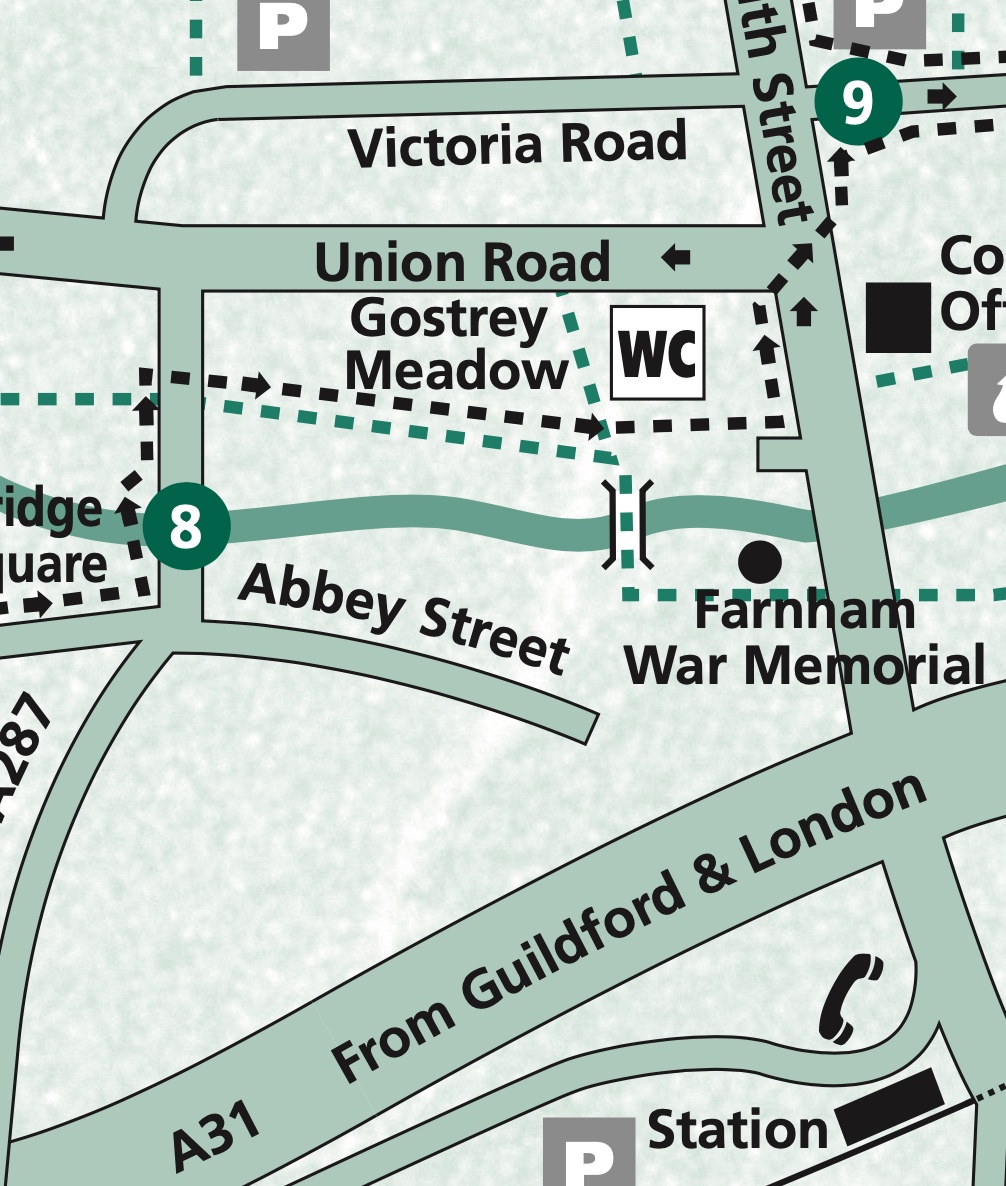
 
Map extract p8-9
 
 War memorial, Gostrey Meadow, Farnham.
 
An open space through which flows the River Wey and contains a children’s play area, a handy public convenience, and the town’s war memorial. On your left with the weather vane is the former Church House (now The Vineyard Church) which was built in 1909. Past the memorial emerge into South Street, cross over and turn left passing the town council offices and the Methodist Church to arrive at the Liberal Club. This was the architect Edwin Lutyens’ first public work to be built, there’s an information plaque on the building giving more details. It’s also point 9 on the trail map.
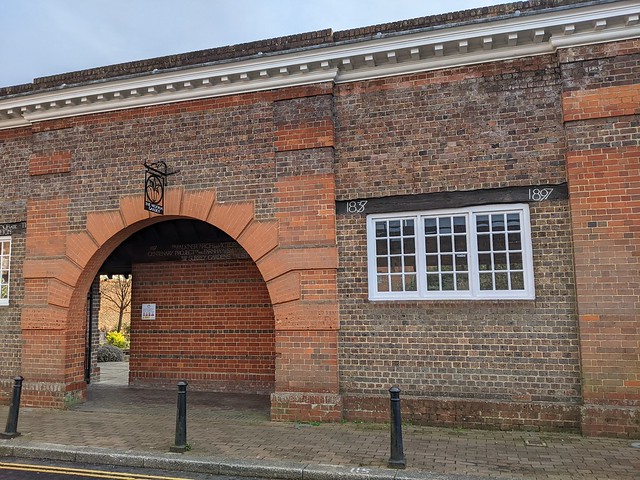
 
 The Victoria Garden, Brightwells Rd. Farnham.
 
Down the side of the Liberal Club in what is either Brightwells Road or Falkner Court depending which map you look at is a large arch leading into Victoria Garden. This garden was formerly an open air swimming baths built in 1897, as attested by the lettering on the wooden lintels above the windows. Go trough the arch and in the garden you will find a wooden sign from the swimming baths advertising that bathing was mixed and at the far end a statue of a small boy in swimming trunks who looks bloody frozen! Returning to South Street and turning right will bring you to the main crossroads in the town centre. On the far side is a milestone showing the distances to London (38 miles), Bagshot (12 miles), and Alton (9 Miles). Behind the milestone is a wooden hoarding over which can be seen the top of a pile of rubble. This is the remains of the 1960s Brutalist Woolmead House complex  of shops and flats. Condemned as “ugly” and by the developer as “lacking the quality associated with Farnham and the adjoining conservation area and lacking civic presence” it was demolished in the winter of 2018/2019. Supposedly to be redeveloped but still in 2022 just a wasteland spreading dust across the town centre. Strangely there’s no reference to Woolmead House in the trail leaflet. Not all heritage is equal.
 
Heading West from the crossroads along The Borough on the left is the entrance to the courtyard of the Bush Hotel, at 500 years old it’s the town's oldest hostelry and a former coaching inn. It’s point 11 o the trail map.
 
 Courtyard of the Bush Hotel, The Borough, Farnham.
 
Further along The Borough is Borelli Yard, named for local businessman and councillor Charles Borelli whose family’s clockmakers shop was nearby in The Borough and held a Royal Warrant from Queen Victoria. This is point 12 in the trail leaflet says that the date 1610 can be seen by looking up under the archway but I was obviously not looking in the right place.
 
Borelli and local architect Harold Faulkner acted in the early 20th century to restore many of Farnham’s old buildings and had much influence over planning in the town. Looking at some of the development currently underway in the town centre I think there’s a chance both are now spinning in their graves. In Borelli Yard there is a bronze sculpture by local artist Ben Franklin called ‘Matriarch’, which I’m sure that the artist understood and a panel on the wall giving information about a medieval tile kiln which was excavated here in the 1980s.
 
Returning to The Borough and crossing the road to the corner of Castle Street brings you to point 1, the official start of the Heritage Trail. I wouldn’t have started it here as previously mentioned point 8 or 9 would be more logical for visitors but I suppose the trail was devised by locals and Castle Street is regarded as one of the town’s highlights. 
 
 Castle Street, Farnham.
 
In the middle of the road at the bottom of Castle Street between 1566 and 1866 stood the Market House and jail, see plaque on the wall of the adjacent bank. There are still market buildings here albeit not in the middle of the road and as far as I know people are not incarcerated in them now.
 
Castle Street is broad and with many historic buildings many older than they appear having gained Georgian facades. A row of Almshouses on the right were built in 1619 according to the plaque outside for “The habitation and relief of eight poor honest old impotent persons”. I assume that last is i the sense of powerless rather than unable to get it up.
 
 Almshouses, Castle Street, Farnham.
 
Carrying on past the Nelson Arms (shouldn’t that be ‘Arm”?) pub to the end of Castle Street where it becomes Castle Hill a long set of steps leads up to Farnham Castle, formerly a bishop’s palace and now "An award winning venue for Weddings, Private Hire, Meetings and Events, overlooking the beautiful, historic town of Farnham”, according to its web site.
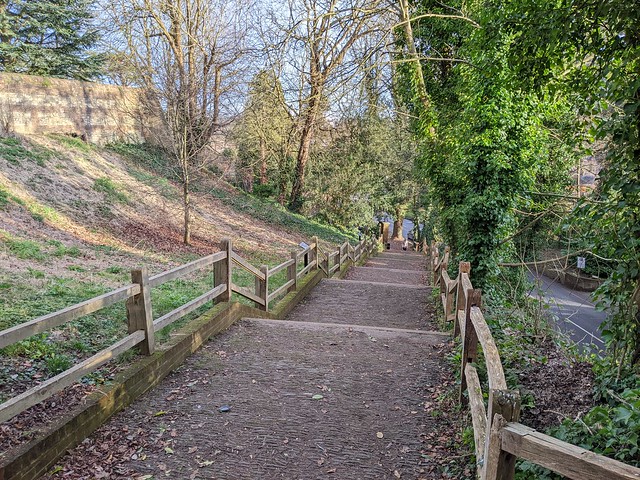
 
 Blind Bishop's Steps, Castle Hill, Farnham.
 
The steps are set out in blocks of seven steps set seven paces apart, built to enable Bishop Richard Fox to walk unaided to and from the town. Successively Bishop of Exeter, Bath and Wells, Durham, and Winchester, Fox gained political power under Henry VII. With the rise of Cardinal Wolsey under Henry VIII Fox's political career waned and he returned to his episcopal duties. In the last ten years of his life his sight failed, hence the special arrangement of the steps.
 
Back down the hill and across Castle Street and turn right into the alleyway called Long Garden Walk opposite the large Plane trees planted in 1897 to celebrate Queen Victoria’s Diamond Jubilee. Long Garden Walk leads to the Hop Blossom pub and rope was once made here in lengths stretching to the far side of Castle Street. It strikes me that must have interfered somewhat with traffic on one of the main roads in and out of the town centre.
 
 The Hop Blossom, Long Garden Walk, Farnham.
 
At the end of Long Garden Walk outside the supermarket is Lion & Lamb Yard. Turn left here into this shopping area the first part of which dates from the 1980s but looks older apart from the barn on the left formerly a vehicle repair garage and now an (empty at the time of writing) retail unit. At the bottom of the yard is an old water pump and the former Lion & Lamb Hotel building whence the yard derives its name.
 
 Water pump, Lion & Lamb Way, Farnham.
 
Pass through the arch and turn right into West Street and walk past the Post Office, one of the few modernist buildings and not getting any attention in the trail leaflet, note the multi-coloured concrete frieze on the ground floor. Look up Malthouse Yard at the unusual building (and many Private Property signs) the yard was once owned by a hop garden tallyman.
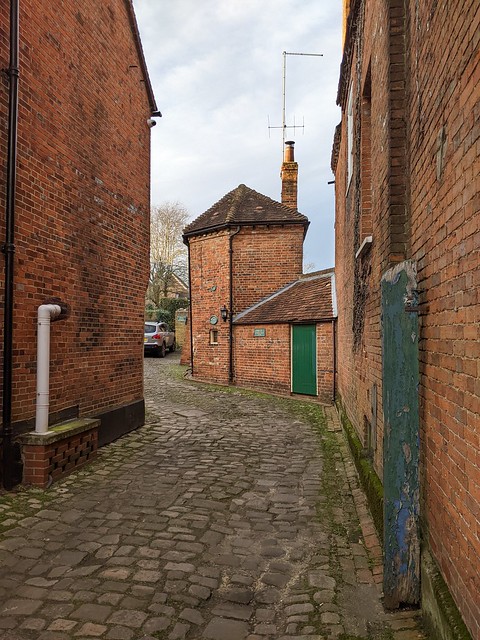
 
 Malthouse Yard, Farnham.
 
The lane running north alongside the timber-framed 98-99 West Street - most Farnham town centre streets number consecutively rather than odds and evens on opposite sides - is Timber Close.
 
 Timber Close, Farnham.
 
Now mostly lined with modern buildings it is believed to be the site of an early prefabricated construction site where in 1395, the hammer-beam roof of Westminster Hall, in London, was constructed and then taken, piece by piece, to London and erected there where it can still be seen today.  Continuing across The Hart to a small green space called College Gardens a plaque set in the grass records that this was  the site of the Senior Department of the Royal Military College from 1814 to 1820 when it moved to Sandhurst, later becoming the Staff College. Across the road at number 38 is the Museum of Farnham in a Grade 1 listed building which due to lack of time had to wait until another day. I headed back towards the centre of town passing number 28, Vernon House.
 
 Vernon House, West Street, Farnham.
 
A ceramic roundel on the wall here records that 'CHARLES I STAYED HERE ON THE NIGHT OF 20 DECEMBER 1648’. From here he was taken to London to face trial and execution. In thanks for his hospitality he gave his host, Sir Henry Vernon, his blue silk morning cap decorated with gold and silver thread. A little over a year later he had nothing on which to wear a cap anyway.
 
Onward past the Bishop’s Table Hotel at 27, West Street, reputed to be haunted, and 25, the large Victorian building, the Farnham Adult Learning Centre. in the past this building has been Farnham Grammar School, Farnham Girls’ Grammar School and Farnham School of Art, now elsewhere in the town. At 24, West Street is Harold Falkner’s house, the aforementioned associate of Charles Borelli.
 
Turn right into Church Passage. According to the leaflet "this passage is also known as Streaky Bacon Lane. Look at the setts beneath your feet for the reason!" Didn't look like bacon to me. Perhaps its name owes more to the former bacon factory that occupied the building on the right. Decide for yourself.
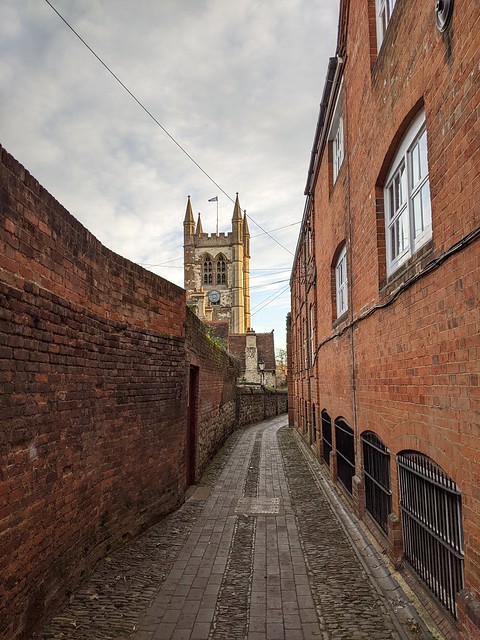
 
 Church Passage, Farnham.
 
I did spot an interesting cast iron cover among the setts though I’m not sure what it covers, possibly a coal hole although those are normally circular. (My job means I now notice things like this almost out of habit, spending much time looking for telephone network infrastructure. This is probably a bit sad.)
 
 A little bit of Chelsea in Surrey, Church Passage, Farnham.
 
Church Passage leads to St. Andrew’s Parish Church, one of Surrey’s largest and the oldest parts of which date from the 12th century. It has been modified, restored, and changed in nearly every century since and is Grade II listed.
 
 St. Andrews Church, Farnham.
 
Near the church door is the tomb of William Cobbett, which records a series of journeys by horseback through the countryside of Southeast England and the English Midlands. Cobbett was born into poverty in 1763, yet rose to become an MP, an advocate of political reform and an author whose most well known work is Rural Rides, which records a series of journeys by horseback through the countryside of Southeast England and the English Midlands.
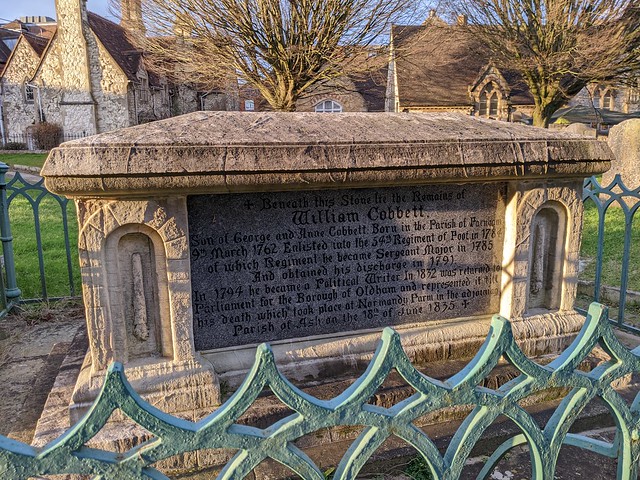
 
 William Cobbett's tomb, St. Andrews Church, Farnham.
 
Out through the churchyard gates and turn left past the row of cottages in Middle Church Lane, often used for period scenes by television companies and left into the even more picturesque Lower Church Lane complete with central gutter, thankfully no longer used as an open sewer as it was in Tudor times.
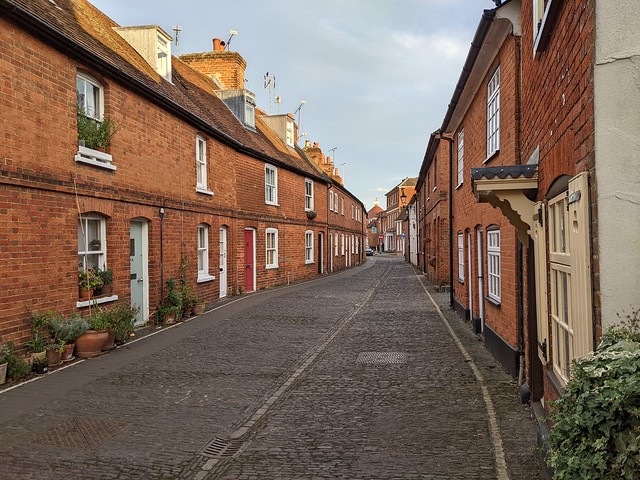
 
 Lower Church Lane, Farnham.
 
Just before the end of the lane turning right into Wagon Yard car park. The wagons from which it takes its name would have carried goods including wheat and must have been a major transport site if what the man told Daniel Defoe was true, that he had "once counted 1,100 teams of horses, all drawing wagons or carts, loaded with wheat, in Farnham on this piece of ground”. Must have resembled the post-Brexit lorry parks in Kent 300 years later. On the other side of the car park and the River Wey is the cultural and arts centre Farnham Maltings, 
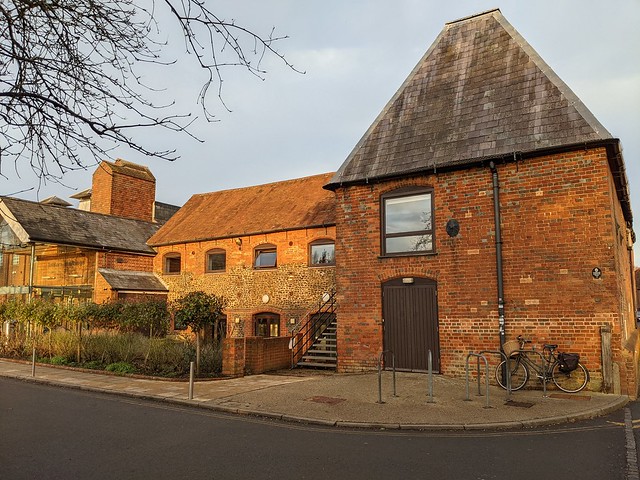
 
 Farnham Maltings.
 
This was a tannery and then a malting house for brewer’s malt until purchased in the 1960s from Courage Brewery by Farnham residents to save it from being demolished. On the corner of the Maltings building, point 7 on the leaflet map, turn left into Red Lion Lane which contains some brewery related “ghost signs” and one of Farnham’s oldest buildings dating from the 1500s but when I passed all but invisible behind builders’ hoardings.
 
 Red Lion Lane, Farnham.
 
At the end of the lane across the road is William Cobbett’s birthplace, an inn then called the Jolly Farmer but now bearing his name because that’s what they do for renowned MPs. There probably aren’t many jolly farmers around here anyway.
 
 The William Cobbett, Bridge Square, Farnham.
 
Following the road around to the left and over Longbridge brought me back to where I started at point 8, Gostrey Meadow. Following this link will take you to more photos taken on my walk.
 
If you lost a small red plastic tractor in Gostrey Meadow speak up, otherwise it can remain decorating my mantlepiece :-)

Monday, 31 January 2022

Metroland Modernism: Harrow.

January 17th 2022
 
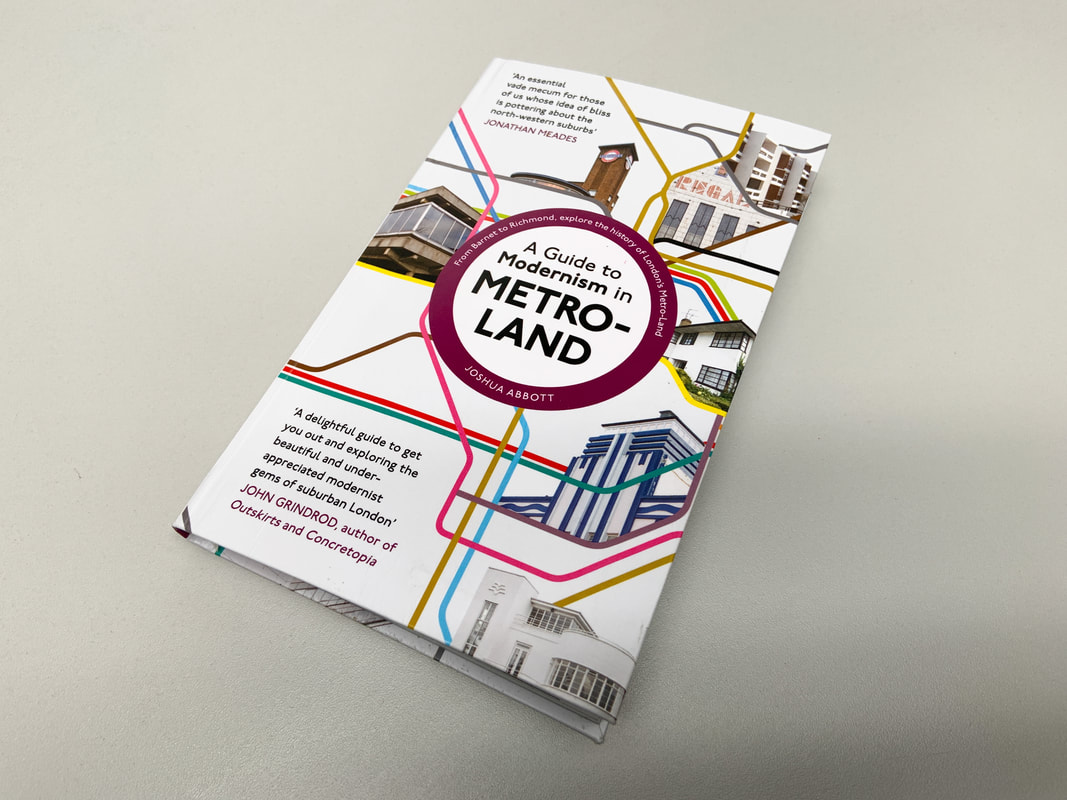
I treated myself to Joshua Abbott’s A Guide to Modernism in Metroland for Xmas so a bright dry sunny day seemed like a good opportunity to make use of it. For my first venture out I picked the borough of Harrow to take a walk around some of the modernist buildings there and get some pictures. 
 
Book cover, A Guide to Modernism in Metroland 
 
I plotted them all and the nearby tube stations on a Google Map first to aid navigation although there wouldn’t be time to visit them all.
 
Starting off at Sudbury Hill Station and making my way to Harrow via Pinner it proved to be a good afternoon for exploring and taking pictures which can be seen here in my Flickr album. (Which should embed in this page but that seems to be broken these days so click on the picture below to view it on Flickr.)
 
 Metroland Modernism: Harrow.
 
I look forward to exploring the rest of the chapters over the next months/years.


Friday, 31 December 2021

Deadpool 2022


Mostly the same as 2021 but with replacements for Prince Phillip and Kenneth Kaunda. 

  • Neil Percival Young (Musician)

  • Leslie Samuel Phillips (Actor & Author)

  • Gina Lollobrigida (Actress, Photojournalist, & Sculptor)

  • James Earl Carter Jr. (39th POTUS)

  • Michael Caine (Actor)

  • Anthony Dominick Benedetto a.k.a Tony Bennett (Singer)

  • Dame Angela Brigid Lansbury (Actress)

  • Pope Benedict XVI, born Joseph Aloisius Ratzinger (retired prelate of the Catholic Church)

  • Melvyn Hayes (English actor & voiceover artist)

  • Burt Bacharach is (American composer, songwriter, record producer, and pianist)


Wednesday, 29 December 2021

London Xmas lights 2021


27th December 2021

Carnaby Street, butterflies, always a sign of the winter months.
 
 Carnaby Street
 
St. Giles Square, illuminated trees in the shadow of Centre Point.
 
 St Giles Square
 
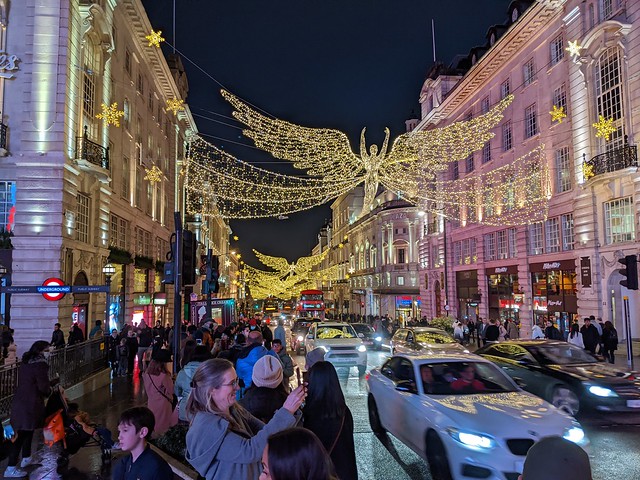
Regent Street St. James angels.
 
 Regent Street St James's
 
Also in Regent Street.
 
 Regent Street
 
New Bond Street, crown? bowl?
 
 New Bond Street
 
Oxford Street, dangly stars, a bit dull, time to bring back the lasers?
 
 Oxford Street
 
 Oxford Street Xmas lights

Sunday, 5 December 2021

A North Hampshire ramble.

 
Hampshire Ramble

24th November 2021

South Warnborough and Long Sutton

A countryside ramble looping out and back on a cold November day. Starting and finishing at Alton Road Cottages in the village of South Warnborough in North Hampshire. Would probably be much nicer in the summer but probably busier too.

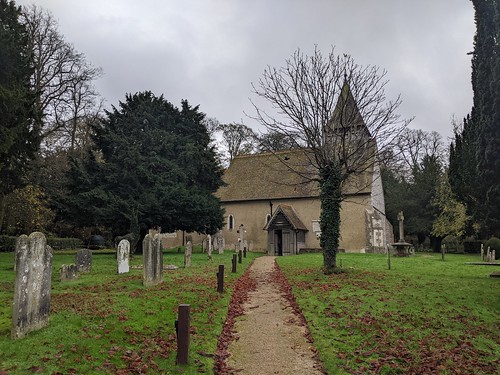
St. Andrews Church, South Warnborough. Historic England says:

C13, C14, Cl5, and 1870. Nave and chancel of the early period with Victorian south aisle (by G E Street). Red tile roof; low-pitched slate roof over the aisle, above the gable at the west end is a broach spire and bell-turret covered in shingles. Mainly rendered walling, but flint is used for the aisle, west gables and buttresses. Most windows are lancets, with a 3-light C16 window in the chancel. Inside, the west end is occupied by the C14 framing of the bell- turret. The remains of a C15 rood screen separates the nave from the chancel. The chancel is notable for its monuments and tombs, mainly related to the Whyte family. Modern timber-framed north porch, with decorative Norman door within. The font is C19, and there is some C16 heraldic glass in the south aisle windows.

St. Andrews Church, South Warnborough.

Leaving the church I turned right and right again up Froyle Lane climbing the hill for a couple of hundred metres before taking the path on the left up a bank and across the fields, overflown by a Chinook from nearby RAF Odiham. This path continued through the undulating fields and past woods for nearly 1.5km until reaching Copse Lane on the outskirts of the village of Long Sutton.

Baaarely taking notice, Long Sutton.

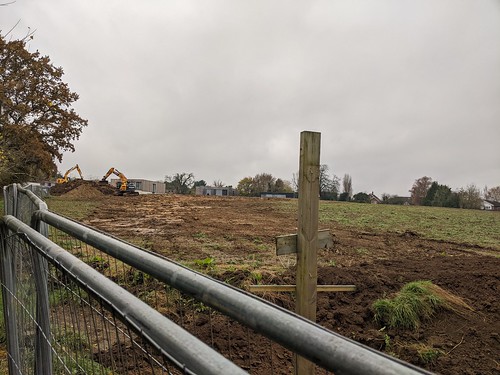
I turned right onto Copse Lane then left onto Wingate Lane, past some smart new "architecturally inspired homes in a distinctive contemporary style" and then left onto a footpath along the edge of the building site where I assume something similar will soon be built. This is “Wingate Meadow” and if you want to read the developer bolx it’s here. A bullseye short of £2million if you’re interested.

Building site,  Long Sutton.

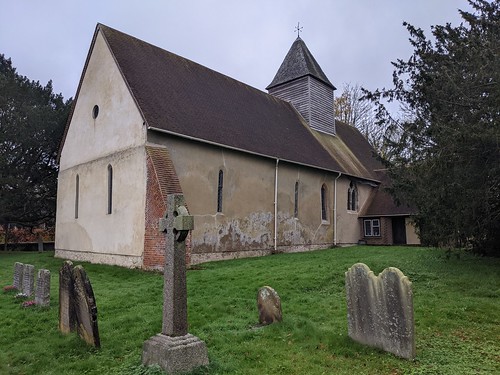
The path brought me out into the village centre next to the village hall and opposite All Saints Church, of which Historic England says:

C13, C15 and modern. Single cell of nave and chancel, with a slightly later chapel attached on the south side of the nave. All of the C13, with a modern north vestry and south porch; C15 timber-framed belfry rising through the centre of the nave. Red tile roof, bell-turret has a pyramid roof with shingles and weather-boarded walling. Walling is roughcast or rendering on flint and stone core, the new vestry is in red brick. Windows are all original lancets, with a circular light above the 2 at the east end, but there is also a traceried 2-light window on the north wall of 1340, a west window of 1862, and restored triple lancets in the east wall of the chapel. The timber-framed porch has a single-slope tile roof, scalloped barge-board, and panelled side frame above a lower wall. Inside, the main timber supports to the belfy are arch-braced( there is a chancel arch of the late C19, a single 13 arch (to the chapel) on ½-round columns, and a font. The south chapel has an ogee leaded niche above a trefoil piscina, a painted Royal Coat of Arms of George IV. 3 bells of circa 1520 are chimed.

All Saints Church, Long Sutton.

What All Saints lacks is a covered lych gate and the porch being small, dark, and with only a narrow plank of a seat I settled on the metal bench opposite for my picnic lunch and watched the passing Range Rovers while warming up with a flask of Bovril.

 All Saints Church, Long Sutton.

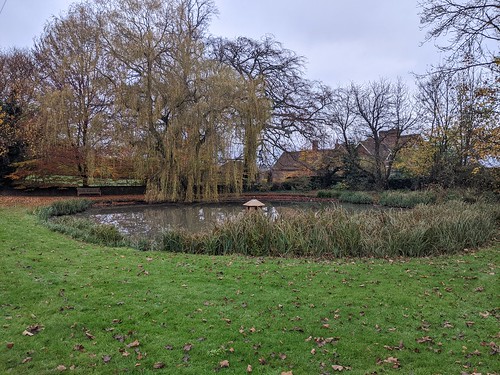
After a meander around the churchyard I continued along The Street passing the Old Post Office and the village pond which would have been a better picnic spot had the benches been dry.

The Old Post Office, Long Sutton.

Village pond, Long Sutton.

At the junction of The Street and Wood Hill Lane I was going to carry straight on into Hayley Lane but it was clear that the safer path, away from the traffic, was to cross the road and follow the field edge path for 600m until it reached the woods and then join the track, Hayley Copse Lane, heading back towards South Warnborough. 

Hayley Copse Lane, Long Sutton.

Hayley Copse Lane ran more or less parallel to and about 250m north of my outward route, through the same undulating terrain once out of the woods. The fields were very empty, didn't see a soul. The advantage of mid-week walks.

Hayley Copse Lane, South Warnborough.

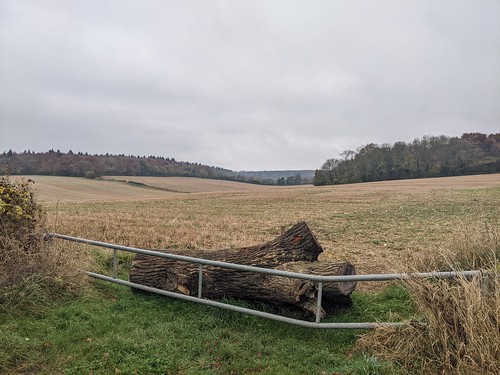
Field gate, South Warnborough.

The lane brought me out onto the Alton Road and when a gap in the traffic appeared I crossed this and turned left back into South Warnborough past The Poacher Inn whose sign claimed that Sunday Lunches were now being served even though it was Wednesday. Along here I met my first pedestrian since setting out. At the crossroads by the war memorial I turned right into Lees Hill.

Finger post, South Warnborough.

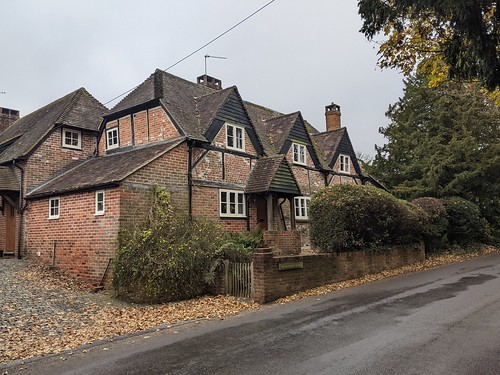
Lees Hill has some very quaint - and expensive, I looked it up - black and white cottages

Rosemary Cottage, South Warnborough.

Because climbing a steep hill only to come down again seemed like a good end to a walk I made my way to the top where the horses enjoy a good view back down into the valley. Then turned left through their field onto the public footpath back down to the Alton Road. Judging by the passive-aggressive home-made signs on the gates there could be no doubt that a: it is a public footpath, and b: that the landowner isn't entirely happy about that.

St. Andrews Church, South Warnborough, from Lees Hill.

And back at the road having strictly stuck to the path I turned right back to my starting point. Nice walk, might come back when it's warmer and sunnier.

Friday, 12 November 2021

Oh island in the (unexpected) sun.

Friday 5th November 2021

I gave it a few days for the teething troubles to settle down before deciding that at trip ‘overseas’ was due to see the new trains on the Isle of Wight. The forecast was for dull, overcast weather but in this case the forecast was pleasantly wrong so I got a nice sunny day at the seaside thrown in.
 
TO THE TRAINS
 
 On Ryde Pierec
 
Some split ticketing and a Network Railcard secured an off peak return to Shanklin for just under £42 including the Wightlink fast catamaran ferry which I reckon worked out cheaper than the alternative I considered of driving to Southsea, parking for the day, and getting the Hovercraft across. Though at some point I do want another hovercraft trip because well, Hovercraft! :-) A late-running train at Guildford meant I got to the island an hour earlier than planned, having caught a connection I’d otherwise have missed. The same thing happened on the way home too which was a double bonus. Should have bought an extra lottery ticket.
 
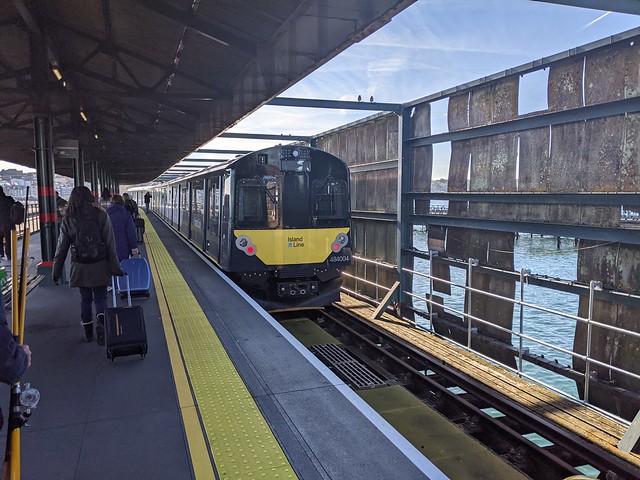
 New Class 484 Island Line train, Ryde Pier Head.
 
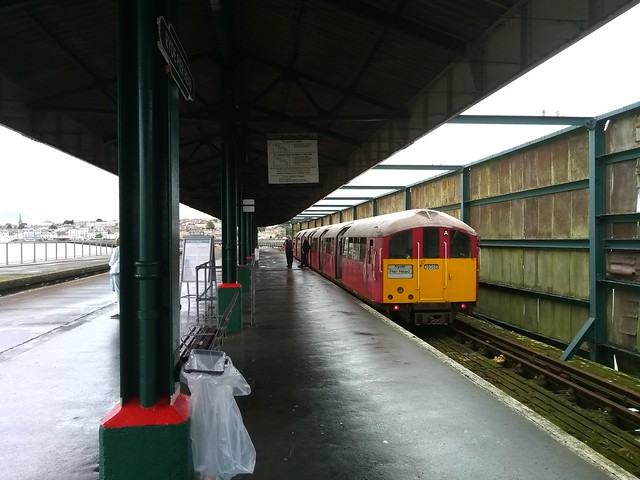
So to the new trains. These started running on the previous Monday, some months later than planned due to you-know-what and the usual software and hardware issues that we now expect with any new trains. The former 1938 ex-London tube trains have finally been replaced. These were much-loved by everyone except I reckon anyone who had to rely on them for their daily travel, at least by the end of their service. 
 
 Island Line, Ryde Pier Head
 
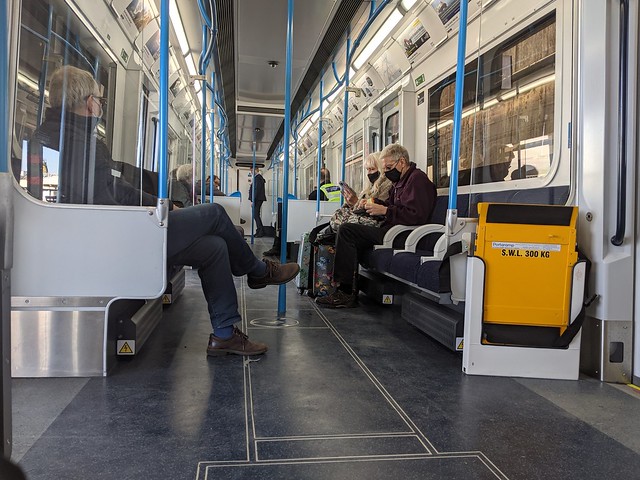
The replacements also previously ran on the London Underground being Vivarail’s Class 484 electric multiple units, rebuilt/upcycled/refurbished, choose whichever term you prefer from the retired District Line D78 Stock trains. They are however a long way from being just “old tube trains”, with bright modern white and blue interiors.
 
 New Class 484 Island Line train, interior.
 
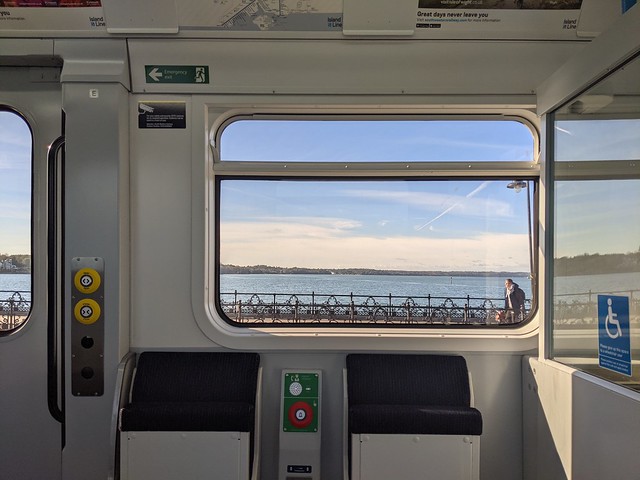
A new blue moquette on the seats and dedicated spaces for wheelchair users. Who will get a better view out than most of the other passengers except those who manage to bag the few transverse 2 + 2 seats in each car. Hmm, should we still call them cars or should it be coaches/carriages now they aren’t on the Underground?
 
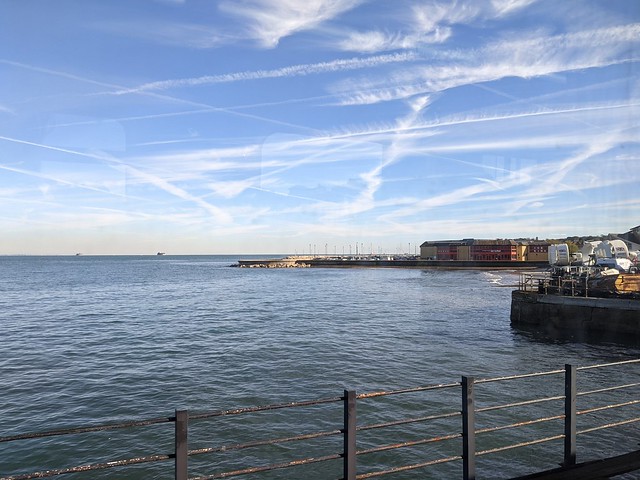
 New Class 484 Island Line train, view from Ryde Pier.
 
Anyway apart from the new trains a lot of other improvements have been made to the line, especially the track, so the run down to Shanklin was much smoother than of old and I didn’t feel I was about to be bounced out of my seat even once.
 
 New Class 484 Island Line train, at Shanklin.
 
One thing I did notice, and I know I’m not alone in this, is how slowly the doors on the new trains open. I don’t remember them being so slow in their previous life but they open about 6 inches and then pause just long enough that you wonder if you should reach out and give them a helping hand.
 
 New Class 484 Island Line train, at Shanklin.
 
Maybe things will free up with use.
 
TO THE SEASIDE
 
From Shanklin Station it’s about a half mile walk down to the beach and this was conducted in very un-November 5th type weather, bright if not as tropical as the following photo might have you believe.
 
 Tropical Shanklin.
 
Good for a walk along the prom though back to Sandown Pier (alas closed) and up to Sandown Station to get a train back to Ryde.
 
 Sandown Pier - a bold claim.
 
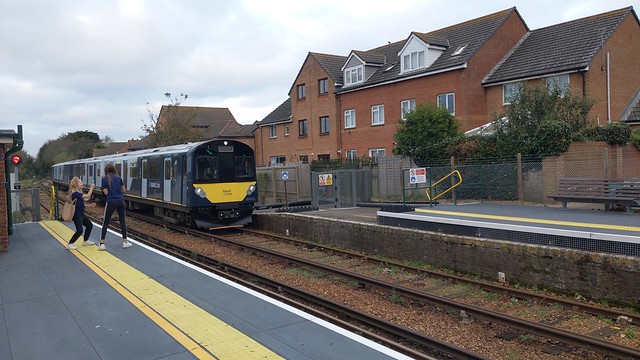
The novelty of new trains hadn’t worn off for the sweary schoolgirls on their way home at Sandown, who made everyone well aware that they were actually supposed to be grounded, and regarded the restriction of passengers beyond the platform end a s a minor challenge. (Yeah Ok, at that age so did we.)
 
 New Class 484 Island Line train, causing excitement at Sandown.
 
Back in Ryde there was enough time to go and get Friday Fish & Chips, eaten on a lamp-lit seafront, before walking down the pier to catch the boat back to the mainland.
 
 Ryde Pier at night.
 
I like the Isle of Wight.
Especially when it doesn’t rain.
“Isle be back"